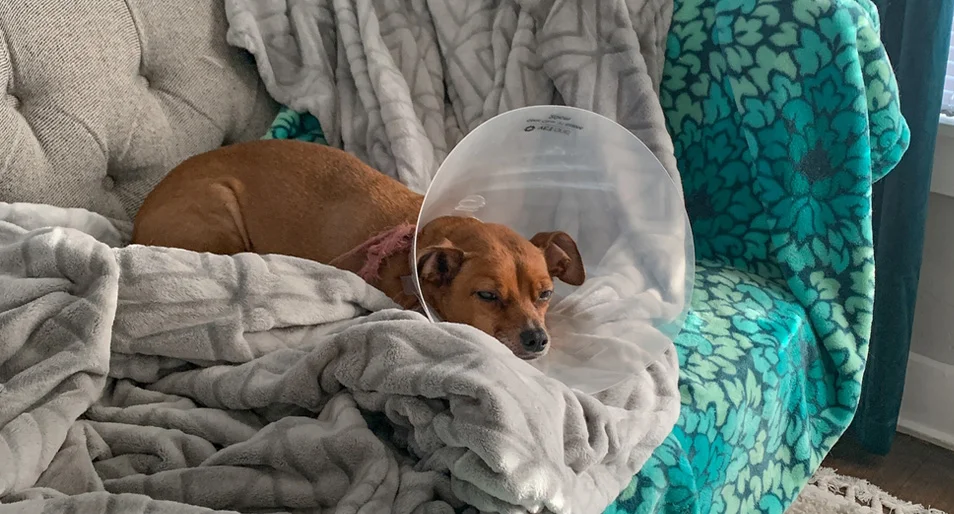
Spaying and neutering are common surgical procedures that prevent dogs from reproducing. Here are the main differences between the two surgeries:2
- Spaying: This surgery is for female dogs and involves removing the ovaries, fallopian tubes, and uterus. Spay surgery prevents the dog from becoming pregnant and stops future heat cycles.
- Neutering: This procedure is for male dogs and involves removing the testes. Neuter surgery sterilizes the dog, which prevents reproduction and potentially reduces mating behaviors.
After either surgery, most dogs can go home the same day. However, it’s important to keep your dog calm and limit their physical activity for about 10 – 14 days after the surgery so they can heal properly. Your vet might also recommend that your dog wear an Elizabethan collar (E-collar or cone collar) so they don’t lick or bite at the surgical site.3
The average cost to spay or neuter a dog ranges between $300 and $800, though the specific costs vary based on the dog’s size, age, and overall health condition.1
Surgery costs also depend on the vet clinic where your dog got the surgery. At a suburban private vet practice, for example, the average cost to neuter a dog is $150 – $200. On the flipside, the average cost to spay a dog may be about $200 – $250.4
The average cost to spay a dog is generally higher than that of neutering because spaying is a more complex surgical procedure. It requires your veterinarian to enter the abdominal cavity to remove the ovaries and uterus, while neutering is typically a less invasive procedure.4
The total cost of spaying or neutering your dog may include several services, although what's included varies by veterinary clinic. Be sure to ask for an itemized estimate before scheduling the procedure. Services may include:3,4
- Pre-surgical exam and blood work: Your veterinarian may recommend a physical exam and blood work to confirm your dog is healthy enough for anesthesia and surgery.
- Additional diagnostic testing: Dogs with certain health conditions may need extra testing before surgery, which can increase the total cost.
- General anesthesia and monitoring: Spay and neuter surgeries require general canine anesthesia. Larger dogs or breeds with special anesthesia needs may require additional medication or monitoring.
- Intravenous (IV) catheter and fluids: Some veterinary clinics include IV fluids to help maintain blood pressure during surgery and support recovery.
- Medication: Many clinics provide antibiotics, sedatives, or pain medication after surgery.
- Elizabethan (E-) collar: Your veterinarian may recommend an E-collar to help prevent your dog from licking or chewing the incision site while it heals.
Your dog's size, age, and health all influence your overall dog spay cost or neuter cost. Here’s a look at some of the key elements:4,5
- Dog’s size: Larger dogs generally require more anesthesia and may require more time, which can increase the overall cost to spay or neuter them.
- Dog’s age: The age of your dog can affect the price of spay or neuter surgery. Younger or older dogs may have different surgical needs and risks, which can impact the total cost.
- Location of veterinary clinic: Veterinary fees can vary by geographic location. Costs might be higher in urban areas or regions with a higher cost of living.
- Type of vet clinic: The type of vet clinic — whether it's a private practice or a low-cost clinic — can also affect pricing.
- Medical condition or surgical complexity: Dogs with certain medical conditions may require additional testing or more complex surgery. For example, a male dog with undescended testicles (cryptorchidism) typically requires a more involved neuter procedure. Likewise, spaying a female dog that is in heat or pregnant is generally more complex than a routine spay, which can increase the overall cost.
Here’s a general guideline for when to spay and neuter your puppy, based on recommendations from the American Animal Hospital Association (AAHAⓇ).6
It’s important to discuss the best timing for your dog with your veterinarian to ensure the procedure aligns with your dog's developmental needs. Ideal timing can help prevent potential complications and ensure proper development.6
Size
| Timeframe6
|
Small-breed female (45 pounds or less)
| 5 – 6 months (before their first heat cycle)
|
Large-breed female
| Up to 15 months (finished growing)
|
Again, consulting your veterinarian can provide personalized guidance based on your dog’s breed and overall health.6
Size
| Timeframe6
|
Small-breed male (45 pounds or less)
| 6 months
|
Large-breed male
| 9 – 15 months (completed their growth)
|
Here’s a detailed look at some of the health and behavioral benefits of spaying or neutering a dog.2,7,8
- Protects against certain cancers: Spaying a female dog can help prevent serious health issues, like breast cancer. For male dogs, neutering eliminates the risk of testicular cancer and reduces the chances of developing enlarged prostate glands.
- Prevents painful infections: Spaying your dog also reduces the risk of uterine infections.
- Helps your dog live a longer, healthier life: By reducing the risk of these health problems, spaying or neutering can help your dog live a longer and more comfortable life.
- Stops heat cycles: For female dogs, spaying stops the discomfort and behavioral changes that come with heat cycles, like restlessness, frequent urination, and loss of appetite.
- Reduces roaming and aggressive behaviors: Getting your male dog fixed can also reduce the urge to roam (look for a mate), which can keep them safer. It can also calm some of the more aggressive tendencies tied to hormones.
- Cuts down on marking: Spaying or neutering can also make a big difference if your dog has a habit of marking their territory. You might see fewer incidents of urine marking around the house or yard after the procedure.
The best way to find a place to neuter or spay your dog is by starting a conversation with your veterinarian directly. They may know of financing options to suit your budget. If not, your vet should be able to provide a reasonably priced referral for your dog.
Additionally, whether you're comparing the cost to neuter a dog or the cost to spay a dog, you can check with your local pet store, animal shelter, or humane society to see if they offer vouchers or referrals.
Choosing to spay or neuter your dog is a big step toward their health and happiness. While many pet insurance plans don’t cover these procedures, MetLife Pet Insurance offers a Preventive Care add-on that can help cover some of the costs of spaying or neutering your dog up to your annual limit amount.
This add-on can help pet owners get support for spaying and neutering and make it easier to handle the overall expenses. For more details on how MetLife Pet can help, get a free quote today for pet insurance with Preventive Care.