Heat Stroke in Dogs: What You Need to Know

Four minutes

Dogs can be loving outdoor companions. They often enjoy hiking, running, and picnicking with us throughout the spring and summer — but hot weather can be dangerous for our furry friends, potentially causing heat stroke.

Pet parents need to know the signs of heat stroke, the precautions to take during the warmer months, and how dog insurance could help you in an emergency. 

MetLife Pet can help you cover heat stroke costs

Dog getting a treat from owner on the couch

What Is Heat Stroke?

A dog’s normal body temperature is typically between 100.2°F – 103.8°F (37.9°C – 39.9°C). Heat stroke, also called hyperthermia, is a life-threatening condition that occurs when a dog’s body temperature reaches 105°F (40.5°C).1,2 Dogs are susceptible to heat stroke because they don’t sweat like humans do — instead, they pant or their blood vessels expand, which are both inefficient methods of dissipating body heat.1

Heat stroke is more likely to happen during the summer or when dogs are outside in hot and humid conditions for long periods. It can also occur when a dog is left in a hot car or from strenuous exercise.2 Dogs who are very old, very young, overweight, or have heart issues are more likely to get heat stroke.1

Heat Stroke in Dogs: Signs and Symptoms

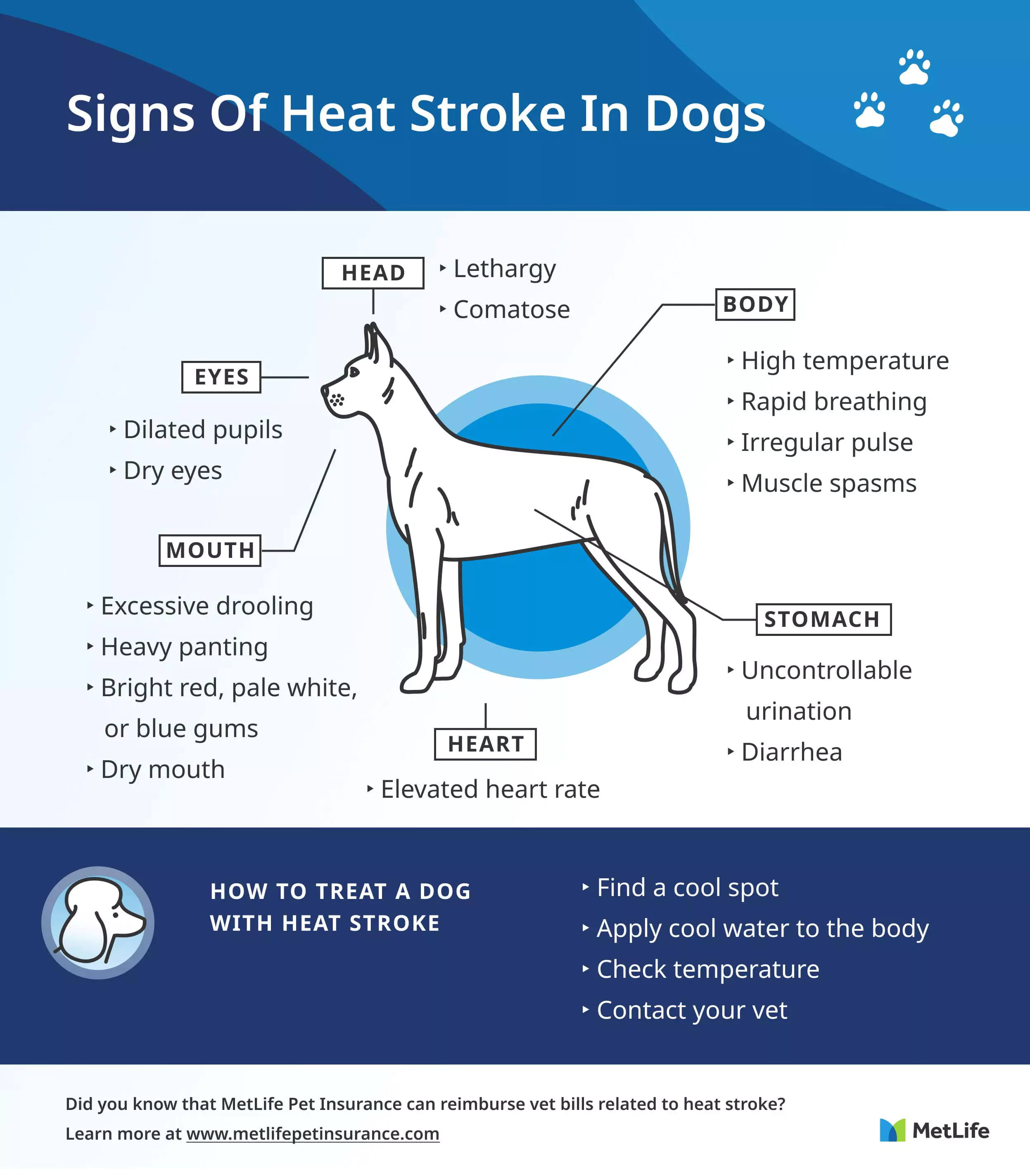
Early intervention is key in protecting your dog from the worst effects of heat stroke. The earliest signs of heat stroke in dogs are:1

  • Excessive drooling
  • Bright red gums and tongue
  • Heavy panting
  • Rapid breathing
  • Dry nose, eyes, and mouth
  • Elevated heart rate

Some dogs may be hot to the touch or have issues maintaining their balance.1 Excessive heat can send your dog into shock. Signs of shock from heat stroke include:1,2

  • Pale white or blue gums
  • Hyperventilation
  • Dilated pupils
  • Irregular pulse
  • Muscle spasms
  • Lethargy
  • Uncontrollable urination or defecation
  • Fainting
  • Bloody diarrhea
  • Confusion

These symptoms require immediate medical attention at an emergency veterinarian since heat stroke is life-threatening.2

Treating Heat Stroke in Dogs: 3 Steps to Take

If your dog is starting to show any of the symptoms of heat stroke, it’s best to act quickly and try to cool them down. Try these steps:1,3

  1. Move to a cool area: Get your dog to a well-ventilated, cool space. Try placing a fan directly on them, too.
  2. Apply cool water: Spray or sponge your dog with cool, tepid water. Don’t put them in an ice-cold bath, as it’s best for the dog’s internal temperature to gradually cool rather than be shocked from instant cold.
  3. Monitor temperature: Observe your dog, and take their temperature if you have a rectal thermometer. Retake their temperature every few minutes until it reaches 103°F (39°C). Once your dog’s temperature drops to 103°F, cease all cooling measures so your dog doesn’t get too cold.

If these measures aren’t working and your dog doesn’t cool down within 10 minutes, take them to the vet immediately.1

How do vets treat a dog with heat stroke?

It’s advised to call your vet once you’ve finished giving your dog first aid and tell them what’s going on. They will likely want you to bring your dog in even if they are acting normally after cooling off as hyperthermia can affect many parts of a dog’s body.3

At the vet, if your dog’s temperature is still above 103°F, they will likely be given intravenous (IV) fluids, oxygen, and other medications to stabilize their vitals while cooling your pup. Once cooled down, the vet will do various tests, like bloodwork and urine testing, to check for any organ damage, blood clotting, or other issues resulting from heat stroke. Severe cases of heat stroke may require hospitalization overnight, or even for multiple days, while they’re monitored and given continuous treatment.3

Even mild cases of heat stroke shouldn’t be taken lightly. Dogs who experience heat stroke are likely to experience it again, so it's important to work with your vet to ensure your pet’s individual needs are met.3 As a pet parent, it’s recommended to monitor your dog and take steps to prevent heat stroke during the hottest days of the year.

heat stroke graphic

How to Prevent Heat Stroke in Dogs: Essential Tips

The good news about heat stroke is that it’s preventable. There are steps that pet parents can take to ensure their dog doesn’t overheat, even when it’s hot outside.

Avoid heat exposure outside

Consider rearranging your dog walking routine so you and your pup aren’t outside during the hottest parts of the day. This may mean early morning and evening walks during warmer months. If you’re out during the day, be sure to provide your dog with plenty of shade and fresh water. Pack a bottle of water and a bowl just for them to drink from, especially if you don’t have access to a fountain. If temperatures are extremely hot or humid, it’s best to stay inside as much as possible.2

Also, be wary of hot pavement as the pads on dogs’ paws can burn. If you aren’t able to keep your hand or bare foot on pavement for 10 seconds, it’s too hot for your dog to walk on, too.2

Keep dogs cool and comfortable inside

Avoid leaving your dog in hot areas unsupervised, such as the car. The temperature inside a car can increase by up to 40 degrees in under an hour. The inside of a car can quickly become too hot for dogs, even with the windows cracked and if the temperature outside isn’t extreme.2

In your home, air conditioning, fans, and access to fresh water can all help keep your dog cool, especially during extreme heat. You could also offer your pup a cooling pad or a pet fountain.2,3

Watch certain dog breeds and their health conditions closely

Some dogs can be more susceptible to heat stroke than others. Brachycephalic dog breeds have short snouts and flat faces that make regulating heat difficult. This group of dogs includes boxers, pugs, bulldogs, shih tzus, and cavalier King Charles spaniels. Also, pay special attention to dogs with thicker coats, like huskies, pomeranians, and great pyrenees.2

Keep in mind that puppies and senior dogs can be more at risk of experiencing heat stroke. Senior dogs are likely to have pre-existing conditions, such as heart disease, that can make managing their body temperature difficult.1 It’s best to work with your vet on how best to care for your puppy or older dog to prevent heat stroke.

Lastly, pets who are overweight or obese can be more likely to suffer during warm months.1 It’s best to work with your vet to get them back to a healthy weight so they’re less at risk of heat stroke and other weight-related issues.

MetLife Pet Insurance Can Help You Cover Heat Stroke Costs

Even with pet parents doing their best, accidents can happen, which could lead to expensive vet bills. With MetLife Pet’s dog insurance policies, pet parents could save money on the cost of hospitalization, medication, and other necessary treatments for conditions like heat stroke.

Ramses, a dog from Texas, ran around outside for too long in the summer heat and started to show signs of heat stroke. His dog parents rushed him to the vet, where he had to be hospitalized as part of his treatment. The total vet expense was around $2,650, and MetLife Pet covered over $1,900 of the bill.4

By choosing pet insurance, you can focus on your pet's recovery rather than the cost of care. Get started with a free quote today.


Your pet deserves great care. Get it with the help of MetLife Pet.

Woman giving a dog a kiss on the head