Breed Health Spotlight: German Shepherd

3 min read

German Shepherd: Quick Stats

LIFESPAN:

12 – 14 years

WEIGHT:

50 – 90 lbs

HEIGHT:

22 – 26 inches

DO I SHED?:

Yes

Personality:

Intelligent, loyal, courageous, energetic

Common Health Problems:

Hip and elbow dysplasia, degenerative myelopathy, and bloat.

Help protect your German Shepherd

German Shepherd: How Do I Look?

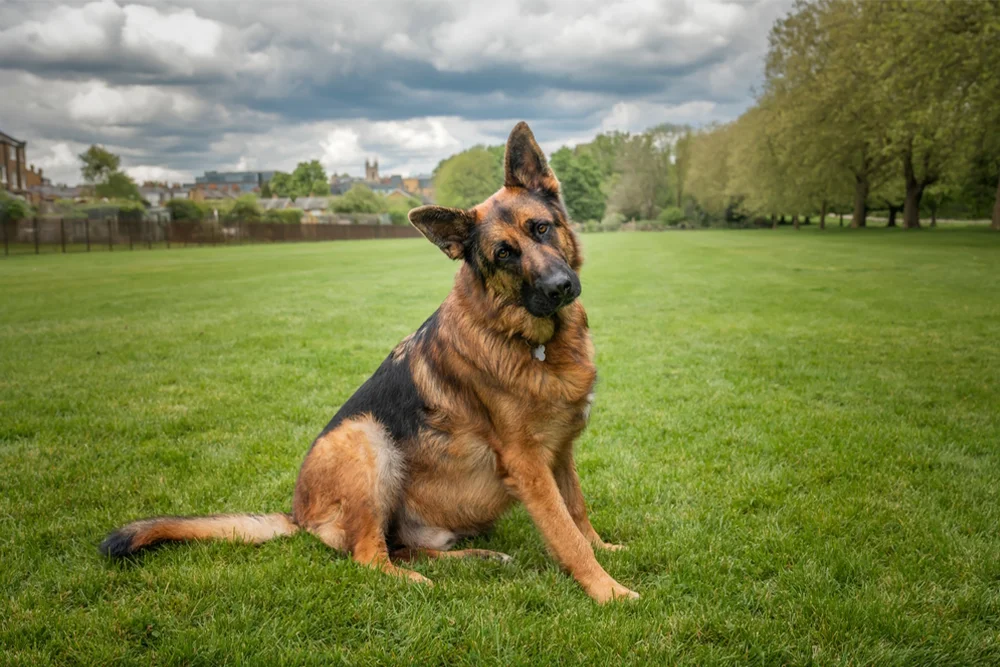
German shepherds are large, athletic dogs with muscular bodies, pointed ears, dark eyes, and bushy tails. Adult females typically stand 22 – 24 inches tall and weigh 50 – 70 pounds, while males generally stand 24 – 26 inches tall and weigh 65 – 90 pounds.1

Coat Type and Colors

German shepherds have a medium-length double coat typically consisting of a dense outer coat and softer undercoat.

The American Kennel Club (AKC) recognizes several German shepherd markings and colors, including:1

  • Black
  • Black and cream
  • Black and red
  • Black and silver
  • Black and tan
  • Blue
  • Gray
  • Liver
  • Sable
  • White
  • Bi-color

Shedding and Grooming

German shepherds are consistent shedders, with their shedding becoming especially heavy once or twice a year.1 Their coat is simple to maintain, needing only a quick brush every few days to remove loose hair. They only need occasional baths, but their nails should be kept short with monthly trimming to prevent pain.1

Ears and Tails

As German shepherds mature, their pointed ears usually become fully erect, contributing to their alert appearance. They also have a long, bushy tail that naturally hangs in a gentle curve when relaxed.2

Drooling Level

German shepherds aren’t considered a drool-prone breed. While they may drool from time to time, excessive drooling is uncommon.1

German Shepherd: Personality Traits

What My Adoption Bio Would Say:

I’m smart, confident, and happiest when you give me a job to do, even if that job is following you from room to room. Give me consistent training, plenty of exercise, and a place in your family, and I’ll reward you with loyalty, courage, and enthusiastic companionship!1

Behavior

German shepherds are confident, alert dogs with strong protective instincts. They are highly intelligent and incredibly loyal to their loved ones; the breed standard describes them as direct and fearless without being hostile.1,2 They are typically reserved rather than aggressive toward strangers.3

German shepherds are exceptionally energetic and eager to please; they need constant mental stimulation, as pent-up energy and frustration can lead to undesirable behaviors.1

Trainability

German shepherds are a highly intelligent and adaptable breed. They are very attached to their people and will do their best when being raised in a household that exposes them to regular activities.1

The German shepherd breed will usually respond best to structured, reward-based training that challenges both mind and body. Early socialization, positive reinforcement, and consistency are key!1,3

Exercise Needs

German shepherds are active working dogs that need substantial daily exercise and mental stimulation for at least 1 – 2 hours per day.3 A quick walk around the block probably won’t be enough for most healthy adults!1,3

This breed is generally best for people who have enough time for daily exercise, training, and interaction. You can keep your dog engaged with activities like:3

  • Long walks
  • Hikes
  • Herding
  • Fetch
  • Nose work
  • Tracking
  • Agility

Good With Kids?

Yes, German shepherds are one of the best dog breeds for families with kids. When trained and socialized properly, they are loving and patient family dogs. Many become deeply attached and take their role as family companion seriously.1

While training your German shepherd is important, it's equally important to teach children how to approach and handle dogs respectfully. It’s best to supervise their interactions.3

Good With Other Pets?

German shepherds can live successfully with other pets, especially when you introduce them carefully and socialize them from a young age. Your dog’s individual temperament, past experiences, prey drive, and training will all affect how they respond to other animals.1

Barking Level

German shepherds are naturally alert, but they aren’t excessive barkers. They may bark when someone approaches your home, or something changes in their environment. Barking helps them perform guarding and herding work, but it can become disruptive without training and enough activity.1

German Shepherd History

German shepherds may be popular around the world, but they’re a relatively modern breed. Their development began in late-19th-century Germany, where cavalry officer Max von Stephanitz set out to create a versatile working dog with intelligence, endurance, a steady temperament, and a strong ability to follow direction.2

The breed was originally developed to herd and protect sheep, but its athleticism and trainability soon opened the door to many other jobs. Today, you’ll find the German shepherd breed working in the military and police forces, supporting search and rescue, bomb sniffing, and patrolling.1,2

The American Kennel Club recognized the German shepherd Dog in 1908.4 The breed remains well known for combining serious working ability with close companionship.1

Common German Shepherd Mixes

German shepherd mixes can inherit physical and behavioral traits from either parent breed. Popular German shepherd mixes include:5

  • Beagle shepherd: A German shepherd and Beagle mix
  • Sheppit: A German shepherd and American Pitbull terrier mix
  • German Australian shepherd: A German shepherd and Australian shepherd mix
  • Shollie: A German shepherd and Border collie mix
  • Corman shepherd: A German shepherd and Pembroke Welsh corgi mix

Common German Shepherd Health Issues

German shepherds are generally healthy dogs, but like all breeds, they have a higher risk of certain inherited and acquired health conditions. Common German shepherd health issues include:1,3

  • Hip dysplasia
  • Elbow dysplasia
  • Degenerative myelopathy
  • Gastric dilatation-volvulus (GDV) and bloat
  • Allergies
  • Heart disease

German Shepherd: Costs

The cost of bringing home a German shepherd depends on whether you adopt or purchase from a breeder. A puppy from a reputable breeder may cost approximately $2,000 – $4,000, with prices varying by location, pedigree, health testing, and training.3 Adoption through a shelter or breed-specific rescue is generally less expensive and may include initial vaccinations, microchipping, and spaying or neutering.

German shepherds’ costs are often higher than they are for smaller breeds. The average lifetime cost of owning a large dog is about $58,875, depending on your dog's health, lifespan, and lifestyle.6

How Pet Insurance Can Help German Shepherds

German shepherds are predisposed to several health conditions that can require advanced diagnostics, surgery, rehabilitation, or ongoing medical management. Here are some of the most common:

Medical Issue

Average Treatment Cost

Hip Dysplasia

$3,500 – $10,000 (per hip)7

Elbow Dysplasia

$1,500 – $4,000 (per elbow)8

Degenerative Myelopathy

$1,500 - $4,000 (first year)9

Heart Disease

$1,100 - $2,50010

Your dog deserves great care. Get it with the help of MetLife Pet.