PET INSURANCE
Life After Pet Loss: How Americans Navigate Grief and Adoption Decisions
Apr 21, 2025
Sorry, we couldn't find any results matching
Please:
Sorry, we couldn't find any results matching
Please:
Losing a pet is more than just saying goodbye to an animal — it's losing a beloved family member. For many pet owners, grief is accompanied by financial burdens, difficult decisions, and uncertainty about when or if to bring another pet into their lives. Some hesitate due to unexpected medical bills, while others regret not having pet insurance when it mattered most.
This study explores how pet owners navigate loss, the financial and emotional factors influencing their decisions, and the steps they take to prepare for the future. From delays in adopting a new pet to the growing interest in pet insurance, these findings reveal how pet owners cope with loss and what they learn from the experience.
Deciding when to bring a new pet into the home is deeply personal, influenced by emotional readiness, financial stability, and even the needs of existing pets. While some pet owners wait until they feel fully prepared, others welcome a new pet before their current one has passed.
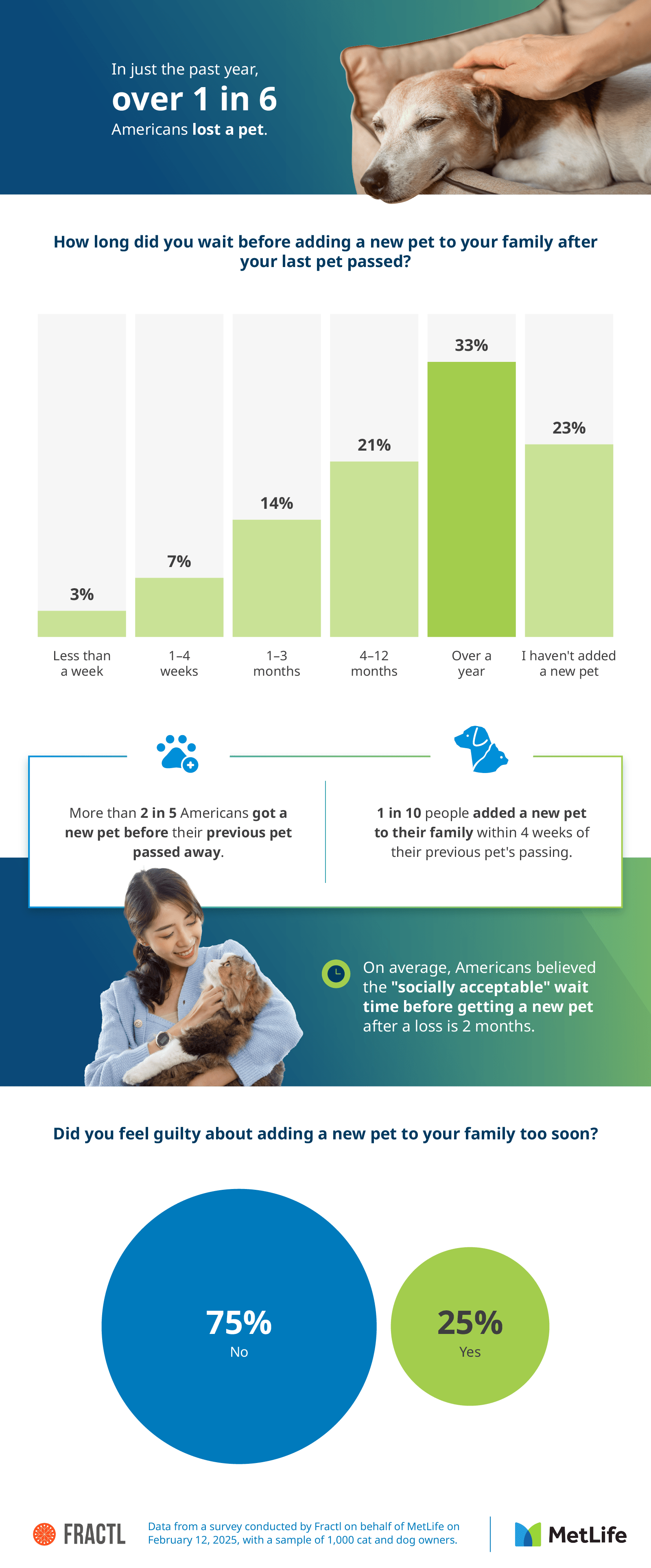
Nearly 3 in 5 Americans lost a pet in the past five years, and 1 in 5 experienced pet loss within the past two years.1 Among pet owners, 1 in 7 dog owners and 1 in 6 cat owners lost a pet in the past year.
For many, adopting a new pet before their older pet passed was a positive experience — more than half of these pet owners reported it went well.2 However, nearly 1 in 5 said their older pet struggled to adjust. Gen Z pet owners were the most likely to take this approach, with almost half doing so. The trend was also common among more than 2 in 5 millennials and Gen Xers, as well as over 1 in 3 baby boomers.
The decision to have multiple pets often stemmed from both practical and emotional reasons.3 While 41% said it wasn't intentional and simply happened due to circumstances, 30% introduced a new pet to provide companionship for their aging pet. Another 14% felt a new pet would help ease their own transition after loss, while 12% wanted to ensure their home always had a pet.
Financial concerns prevented more than 1 in 4 Americans from adopting a new pet after a loss.4 Even those who did so struggled with emotional challenges — more than 1 in 4 dog owners and 1 in 5 cat owners felt guilty about getting a new pet too soon. Guilt over the timing of adoption was common, with more than 1 in 4 Gen Xers and Gen Zers and 1 in 5 baby boomers and millennials feeling this way.
Losing a pet is an emotional experience, and how owners move forward varies widely. While some find comfort in adopting a similar pet, others make changes based on lifestyle, financial considerations, or the grieving process.
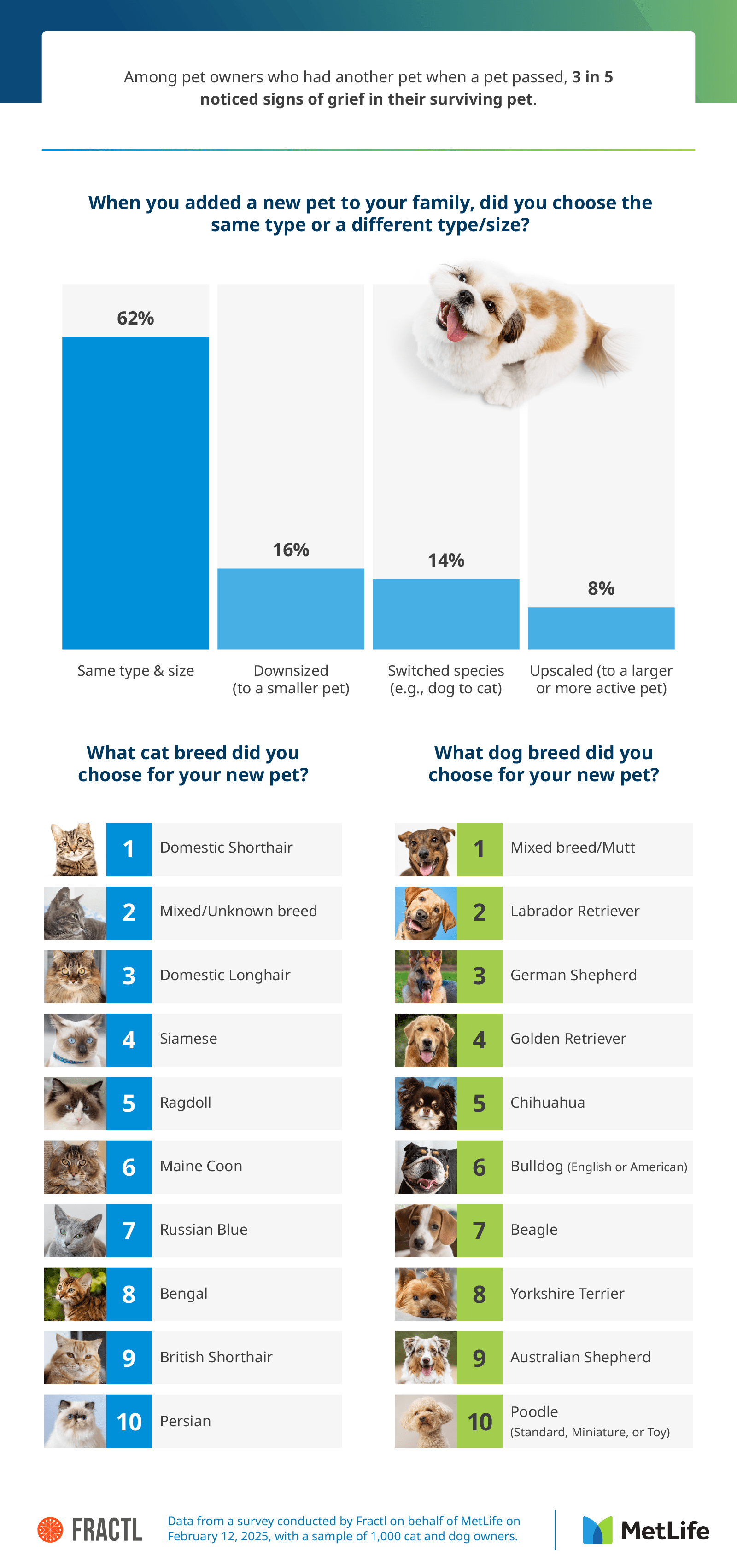
Adopting a new pet provided emotional relief for nearly 3 in 4 Americans, who said having another pet helped them cope with grief.5 The bonding process varied, with over 1 in 3 forming an immediate connection, while 1 in 4 took a few weeks to adjust. Most pet owners (62%) chose the same type and size of pet after a loss, but some made intentional changes.
Financial concerns led 1 in 4 Americans to opt for a lower-maintenance pet, while others switched breeds — 1 in 6 cat owners and 1 in 8 dog owners chose a different breed for their new companion. The most popular choices for new cat adoptions included Domestic Shorthair, mixed-breed, and Domestic Longhair cats. Dog adopters most often chose mixed-breed, Labrador Retriever, and German Shepherd dogs.6
While emotions play a significant role in pet adoption decisions, financial realities often determine when and how owners welcome a new companion.
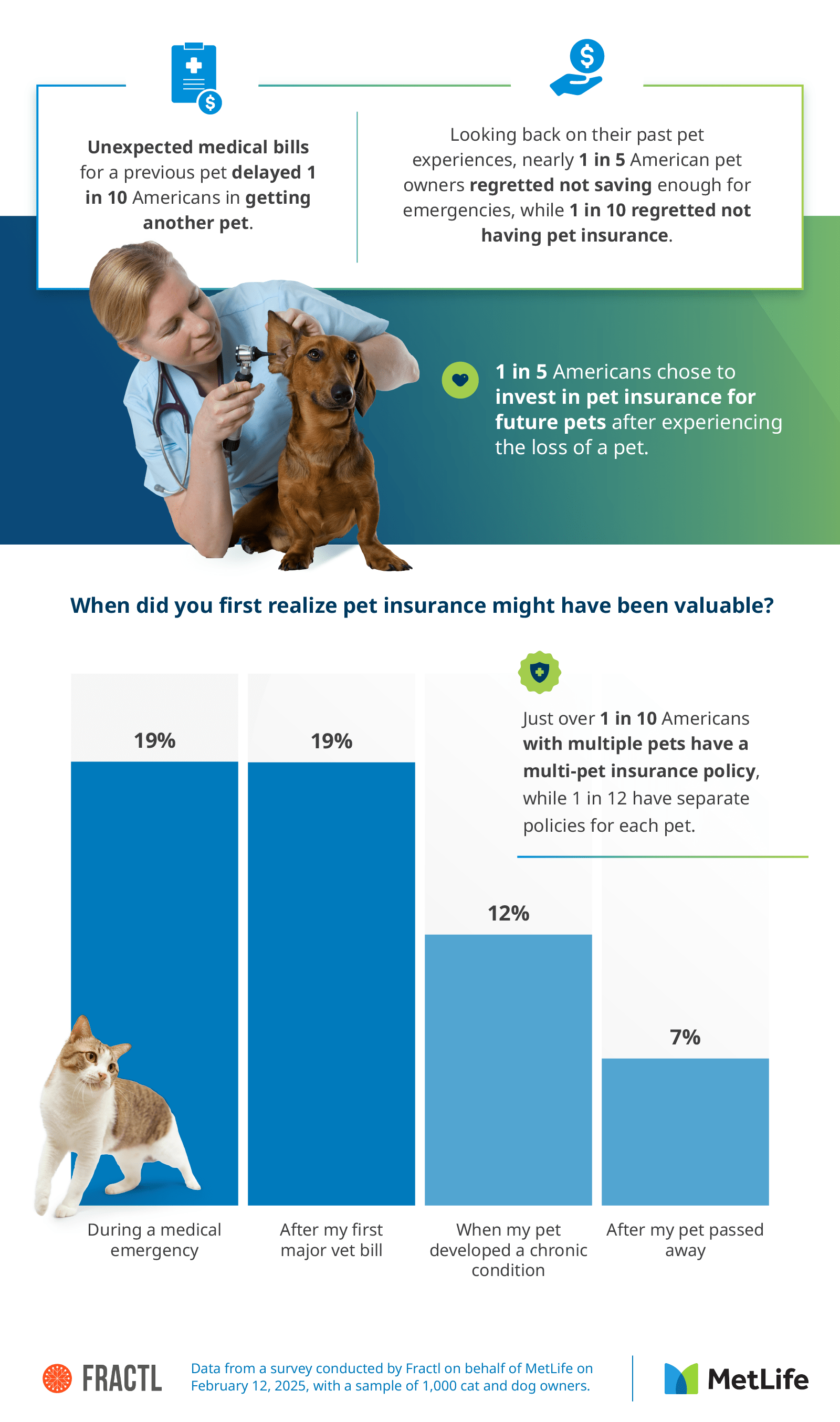
For many pet owners, unexpected medical expenses influenced their decisions about future pets and financial preparedness. Nearly 1 in 5 baby boomers, 1 in 7 Gen Zers, and around 1 in 10 Gen X and millennial pet owners delayed getting another pet due to unforeseen veterinary bills from a previous pet's care.7
Financial regrets were common, especially among younger pet owners: 1 in 5 Gen Zers wished they had saved more for emergencies, while 1 in 10 regretted not having pet insurance.8 These experiences prompted some to take proactive steps, with 20% of Americans opting to invest in pet insurance for future pets.
Over 1 in 3 Gen Z pet owners invested in pet insurance after losing a pet, a higher rate than any other generation. Dog owners were also more likely than cat owners to seek coverage, with nearly 1 in 3 purchasing pet insurance after losing a pet, compared to about 1 in 5 cat owners.
Losing a pet brings both emotional and financial challenges, shaping how and when pet owners choose to welcome another companion. Many struggle with unexpected veterinary costs, while others take steps to better prepare for future pets, including buying pet insurance. The decision to adopt again is personal, but for most, having another pet provides comfort and helps ease grief.
Ultimately, thoughtful financial planning — whether through savings, pet insurance, or budgeting — can help you ensure that future pets receive the best possible care, providing both security and companionship for their owners.
This survey, conducted by Fractl on behalf of MetLife on February 12, 2025, examined 1,000 American pet owners to explore how Americans navigate the emotional, financial, and practical decisions of getting a new pet after losing a beloved one. The average age of respondents was 41; 51% were female, 48% were male, and 1% were nonbinary. Generationally, 9% were baby boomers, 25% were Gen X, 51% were millennials, and 15% were Gen Z.
MetLife Pet Insurance provides comprehensive insurance solutions for pets, offering pet owners financial security and peace of mind when it comes to veterinary care. We can cover everything from routine check-ups to emergency services depending on your level of coverage and the plans you choose. Help your pets get the care they need and worry less about the costs.
Feel free to share these findings for noncommercial purposes, but include a link to this page.
**As with any insurance policy, coverage may vary. Review our coverage and exclusions.