How Much Do X-Rays Cost for a Cat?

Four Minutes

The average cost of a cat X-ray is around $100 – $250 per image, but complex or emergency X-rays could cost more. The total cost depends on factors like the type of X-ray, whether sedation is needed, and how many images are needed.1,2

Let’s go over the cost of veterinary X-rays for cats, what you might expect to pay if your feline needs them, and how cat insurance can help you with the costs.

MetLife Pet can help you cover cat X-ray costs

Cat X-Ray Costs

On average, you could pay between $100 and $250 for one cat X-ray image; however, emergency X-rays may cost more — around $200 – $400.1,2 More specialized or complex imaging, like a real-time X-ray of moving parts called a fluoroscopy, could reach up to $800.1

The area of the body requiring X-rays can also impact the price. For example, you might pay more for a chest X-ray than a dental X-ray.1

Because additional factors can affect pricing, it’s a good idea to ask your veterinarian for a cost estimate based on your cat’s specific situation. A MetLife Pet cat insurance plan may help you shoulder some of these expenses for covered injuries and illnesses.

What Factors Affect the Cost of Cat X-Rays?

Several factors can influence the overall cost of cat X-rays. Here are some of the most common ones that can impact the total vet bill.

Size of your cat

Your cat’s size can affect how much you’ll end up paying for an X-ray. Larger cats may require specialized equipment, larger plates, or additional sedation to make sure they stay calm and still during the procedure. This can result in higher X-ray costs compared to those for smaller cats.1

Severity of the injury

How serious your cat’s injury or condition is plays a significant role in determining the total cost of the X-ray. If your cat has a more serious health issue or injury, your vet may need to take more detailed X-rays or take multiple views of the affected area(s) to fully assess the situation, which can increase the cost.1

Amount and type of X-rays needed

Your cat may need more than one X-ray or different kinds of X-rays depending on their specific situation, which typically increases the final cost. Each additional X-ray involves extra time, resources, and equipment use, which can all contribute to the final bill.1

Sedation or anesthesia

Sedation or anesthesia may be necessary for some X-rays, especially if your cat is nervous, uncomfortable, or needs to be completely still. The need for sedation or anesthesia could add up to $300 to the vet bill because it often involves extra medications and monitoring.1

Type of veterinary clinic

The type of veterinary practice where your cat gets the X-rays can affect the overall price. X-rays at a general vet’s office are often less expensive than those performed at an emergency vet or specialty animal hospital. Emergency clinics may also charge higher fees because of their advanced facilities and urgent care capabilities.1

Geographical location

The location of your vet clinic can also influence X-ray costs. Vet practices in larger cities or more affluent regions may charge more compared to those in rural or less populated areas. These regional cost-of-living differences can impact the overall price of your cat’s X-ray.1

Additional treatments or services

Extra treatments or services related to your cat’s X-ray can also impact the overall cost — including diagnostic tests like blood work and the vet exam and consultation. These services help ensure your cat is fully cared for, but could contribute an additional $430 or more to the vet bill. Remember, this also depends on where the X-rays are taken because a general practice vet visit fee might be $80, but an emergency vet visit fee might be $200 or more.1,2

Follow-up appointments and necessary treatments based on the results from the X-ray(s) will further increase the total diagnostic and treatment cost of your cat’s condition.1


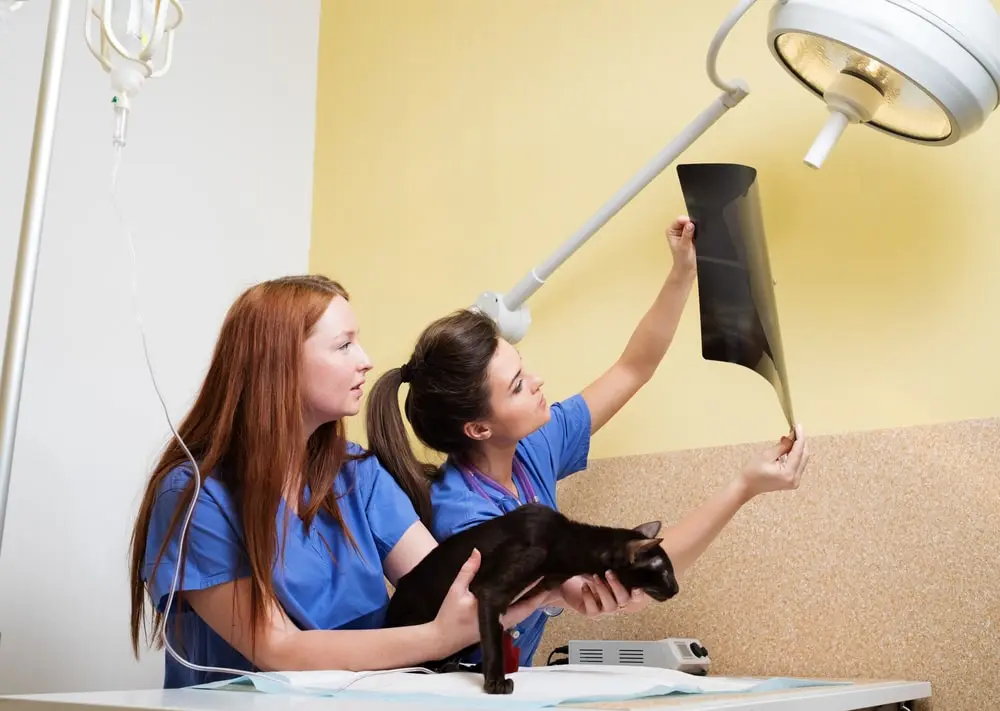
Two women in an exam room with a black cat, examining its x-ray

When Does Your Cat Need an X-Ray?

Vets use X-rays and other forms of medical imaging to diagnose a wide range of health problems in cats, including:1

  • Broken bones: X-ray imaging can aid in detecting fractures, dislocations, and broken bones.
  • Cardiac and respiratory conditions: X-rays can provide a clear view of your cat’s heart and lungs, helping vets spot asthma or heart disease.
  • Tumors: X-rays help vets locate and assess tumors in various parts of the body.
  • Urinary tract stones: X-rays can aid in detecting urinary tract and kidney stones, helping vets decide whether additional treatment or surgery is necessary.
  • Dental health: Dental X-rays are sometimes needed to identify common dental conditions in cats, like tooth infections, fractures, and decay.
  • Digestive issues: X-rays can show blockages or ingested foreign objects and help vets decide whether objects can pass naturally or have to be removed surgically.
  • Orthopedic conditions: X-rays help vets diagnose and manage conditions like arthritis and hip dysplasia.

X-rays are essential for uncovering what might be bothering your cat and help your veterinarian create a specialized treatment plan. These diagnostic tests can also show potential issues earlier, which could save you from higher costs for more extensive treatments later on.

What to expect during a cat X-ray

Radiographs (another term for X-rays) are a simple and painless procedure. X-ray machines use a small amount of electromagnetic radiation to create images of your cat’s bones, organs, and tissues.3

During the radiology procedure, your cat will need to stay still so the images come out clear. In some cases, mild sedation may be used to keep them calm. X-ray images are taken in a matter of seconds, but the entire procedure could take up to an hour, depending on how many images are needed and the unique situation. Your vet will review the X-rays to determine what’s troubling your cat and discuss the next steps.1

How To Save on Your Cat’s X-Ray Costs

There are several ways to manage or even lower the cost of cat X-rays for pet parents. Pet insurance can help you cover a portion of diagnostic imaging costs, including X-rays, by reimbursing vet bills related to covered injuries and illnesses.

Depending on the reimbursement option you choose, MetLife Pet cat insurance can reimburse you up to 90% of covered costs, reducing your out-of-pocket expenses and helping you manage vet bills.4

Other ways to save on cat X-ray costs include:

  • Visiting a low-cost clinic, nonprofit, or veterinary school
  • Shopping around at other local veterinary offices to find lower prices
  • Talking with your vet to see if sedation is necessary (as this adds to the cost)

While it won’t help you lower the cost, asking your vet if you can set up a payment plan of some kind could be helpful if paying the total bill upfront isn’t easily feasible.

MetLife Pet Can Help You Manage Cat X-Ray Costs

X-rays are an essential tool for diagnosing and treating various health issues in pets. Your cat may need an X-ray at some point in their life, so understanding the cost can help prepare you for this type of procedure.

Having a MetLife Pet insurance plan can help ease the burden of vet bills, like those for X-rays. You can customize your pet’s coverage to fit your budget and their needs, and even combine cats and dogs on a single policy at a discounted rate with our Family Plan.4,5 Get started with a free quote today.

Get cat X-ray coverage with MetLife Pet Insurance