Puppy vs. Senior Pet: How Age Affects Adoption Decisions and First-Year Costs

Four minutes

Bringing home a new pet is one of life's happiest moments. But whether that pet is a tiny kitten, a playful young dog, or a gray-muzzled senior can shape the entire experience.

To explore how Americans make that choice, MetLife partnered with Fractl to survey 1,000 pet owners across the country. Their responses reveal heartfelt motivations, generational differences, and real financial considerations that come with welcoming a pet at any age.

Key Takeaways

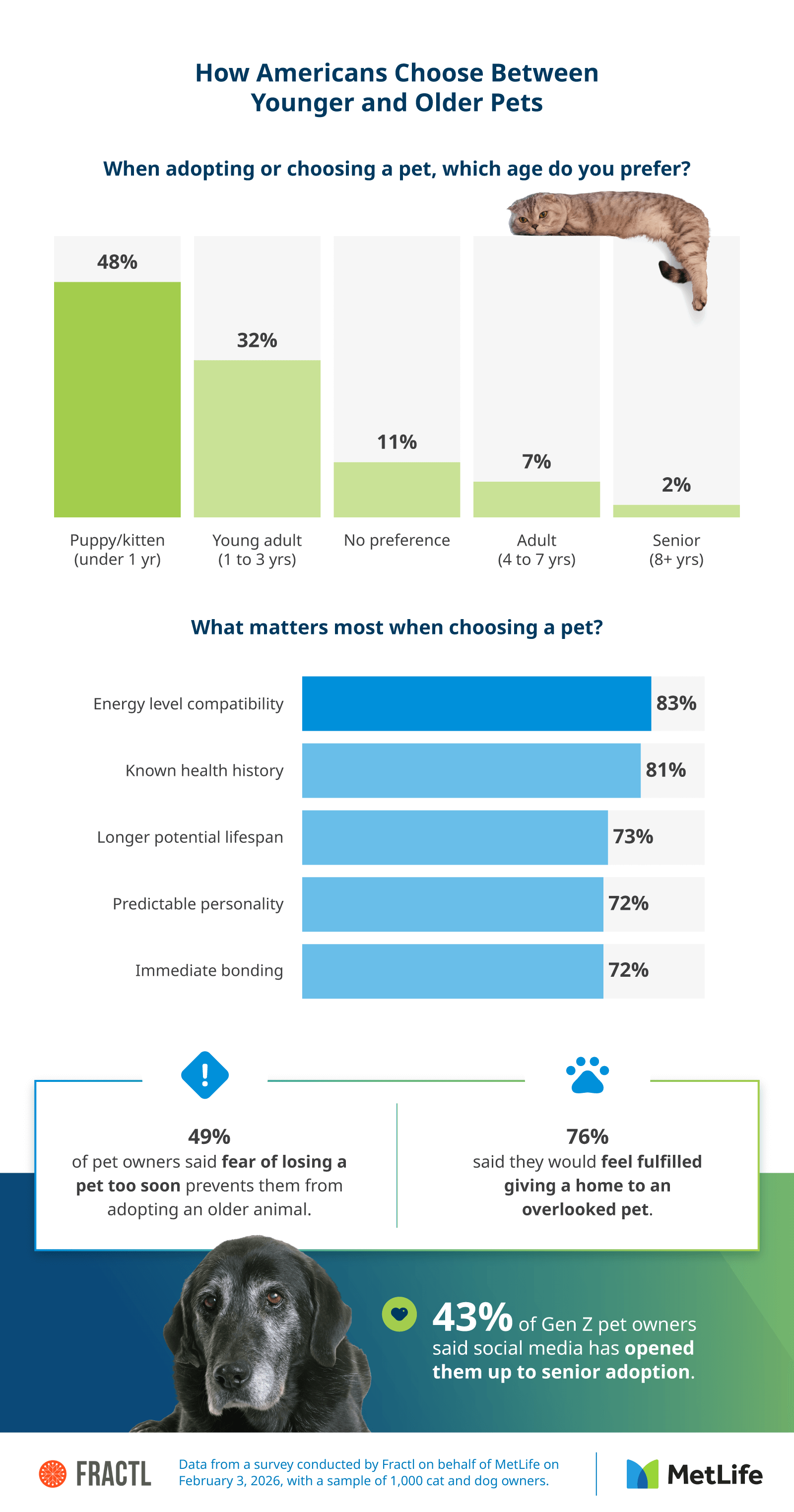
  • Nearly 1 in 2 pet owners (48%) choose to adopt puppies or kittens, while just 1 in 50 (2%) prefer senior pets.
  • 49% of pet owners said fear of losing a pet sooner prevents them from adopting an older animal.
  • Roughly 2 in 5 Gen Z pet owners (43%) said social media has opened them up to senior adoption.
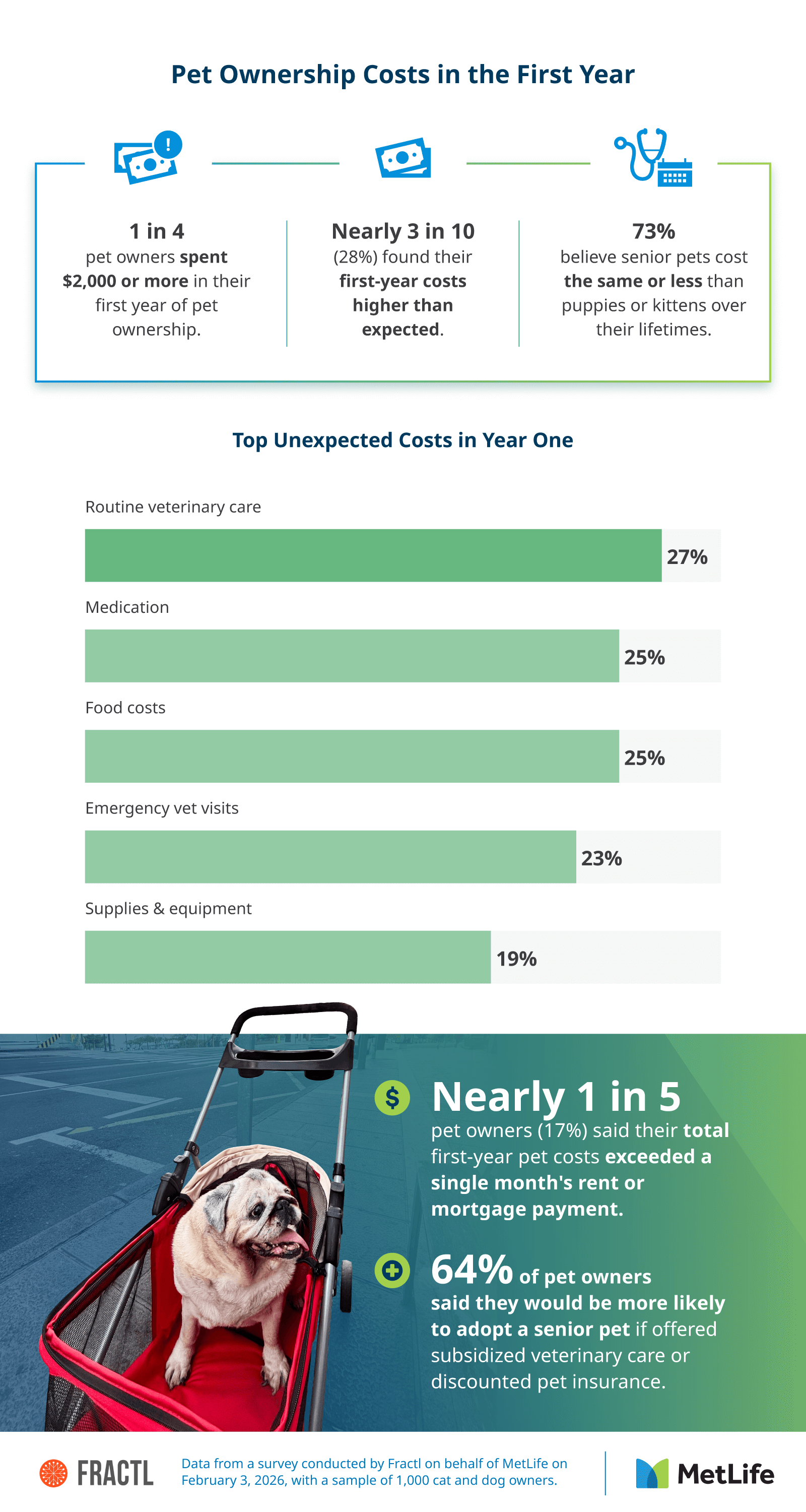
  • 1 in 4 pet owners spent $2,000 or more in their first year of pet ownership.
  • Nearly 1 in 5 pet owners (17%) said their total first-year pet costs exceeded a single month's rent or mortgage payment.
  • 64% of pet owners said they would be more likely to adopt a senior pet if offered subsidized veterinary care or discounted pet insurance.

Why So Many Pet Parents Choose Puppies and Kittens

For many families, the idea of raising a pet from the very beginning feels special. Watching them grow, learn, and become part of everyday routines can feel like building a lifelong friendship from day one.

Nearly half of pet owners (48%) chose to adopt puppies or kittens, and another 32% opted for young adults (1–3 years).1 More than 1 in 10 had no preference, while 7% chose adults (4–7 years) and just 2% preferred senior pets.

More than half of pet owners (52%) believe stronger bonds form with pets raised from a young age. But emotions around loss also play a big role in adoption decisions.

About half of pet owners (49%) said fear of losing a pet sooner rather than later kept them from adopting an older animal.2 That fear was especially common among Gen Z (57%), followed by millennials (52%), Gen X (42%), and baby boomers (35%).

Younger generations were also more likely to say they felt emotionally unprepared for end-of-life care:

  • Gen Z: 48%
  • Millennials: 47%
  • Gen X: 38%
  • Baby boomers: 31%

These feelings can make the idea of adopting a senior pet feel overwhelming, even when the heart is open to it.

More than three-quarters (76%) said they would feel fulfilled giving a home to an overlooked pet, and 66% viewed senior adoption as more compassionate. Social media may be helping shift perspectives, too. While 28% of pet owners overall said it has opened them up to senior adoption, that number climbed to 43% among Gen Z.

And interestingly, 38% said it might be easier to cope with the loss of a senior pet knowing the time together would likely be shorter. All of this shows that pet adoption is rarely just a practical choice. It's personal, emotional, and often shaped by both hope and hesitation.

The Real Cost of a First Year With Your Pet

Bringing home a pet comes with plenty of joy, but it also comes with new expenses. From vet visits to supplies and training, those early months can add up quickly, sometimes more than people expect.

First-year costs were significant for many pet owners:

  • 34% spent $1,500 or more.
  • 25% spent $2,000 or more.
  • 11% spent $3,000 or more.

Millennials reported the highest average first-year cost at $1,204, followed by Gen Z ($1,163), Gen X ($999), and baby boomers ($676). In fact, millennials spent 78% more than baby boomers in year one.

Pet age also made a difference, with owners of pets under age 3 spending an average of $1,105 and those with pets age 4 and older averaging $1,201. Here's the full breakdown of pet ownership spending by pet age:

  • Under 1: $1,132
  • Young adult (1–3): $1,027
  • Adult (4–7): $1,070
  • Senior (8+): $1,555

For some households, these costs felt heavy: 17% of pet owners said their total first-year expenses exceeded a single month's rent or mortgage payment. Younger generations were more likely to report this strain, including Gen Z (19%) and millennials (18%), compared to Gen X (14%) and baby boomers (12%).

In addition, 28% of pet owners said first-year costs were higher than expected. That feeling was most common among Gen Z (34%), followed by millennials (29%), Gen X (24%), and baby boomers (21%).

Owners' perceptions about costs over a pet's lifetime were mixed:

  • Puppy/kitten and senior dog/cat costs would be the same: 39%
  • Senior pets would cost less: 34%
  • Senior pets would cost more: 27%

Nearly two-thirds of pet owners (64%) said they would be more likely to adopt a senior pet if subsidized veterinary care or discounted pet insurance were available.3

Choosing the Right Age Is About More Than Just a Number

There's no single "right" age when it comes to adopting a pet. Puppies and kittens offer the joy of growing together, while senior pets can bring calm companionship and a deep sense of purpose. What matters most is choosing a pet that fits your lifestyle, emotional readiness, and financial comfort.

Before bringing a pet home, take time to think through the first-year costs, your long-term plans, and the level of care you feel prepared to provide. Planning ahead for routine and unexpected veterinary expenses can help you focus less on financial stress and more on building the bond that makes pet ownership so rewarding.