How Pets Are Changing the Way Americans Work, Spend, and Live
Jan 14, 2026
Sorry, we couldn't find any results matching
Please:
Sorry, we couldn't find any results matching
Please:
With the cost of living on the rise and more people working from home, pet owners are making some surprising choices to put their pets first. A recent MetLife survey of 1,000 dog and cat owners found that pets are influencing everything from how people spend money to the jobs they take. Whether it's skipping personal luxuries or staying home to care for a sick pet, many Americans are doing what it takes to keep their pets happy and healthy in 2026.
Key Takeaways
Many pet owners are stretching their budgets and time to care for their animals, even if it means making sacrifices elsewhere.
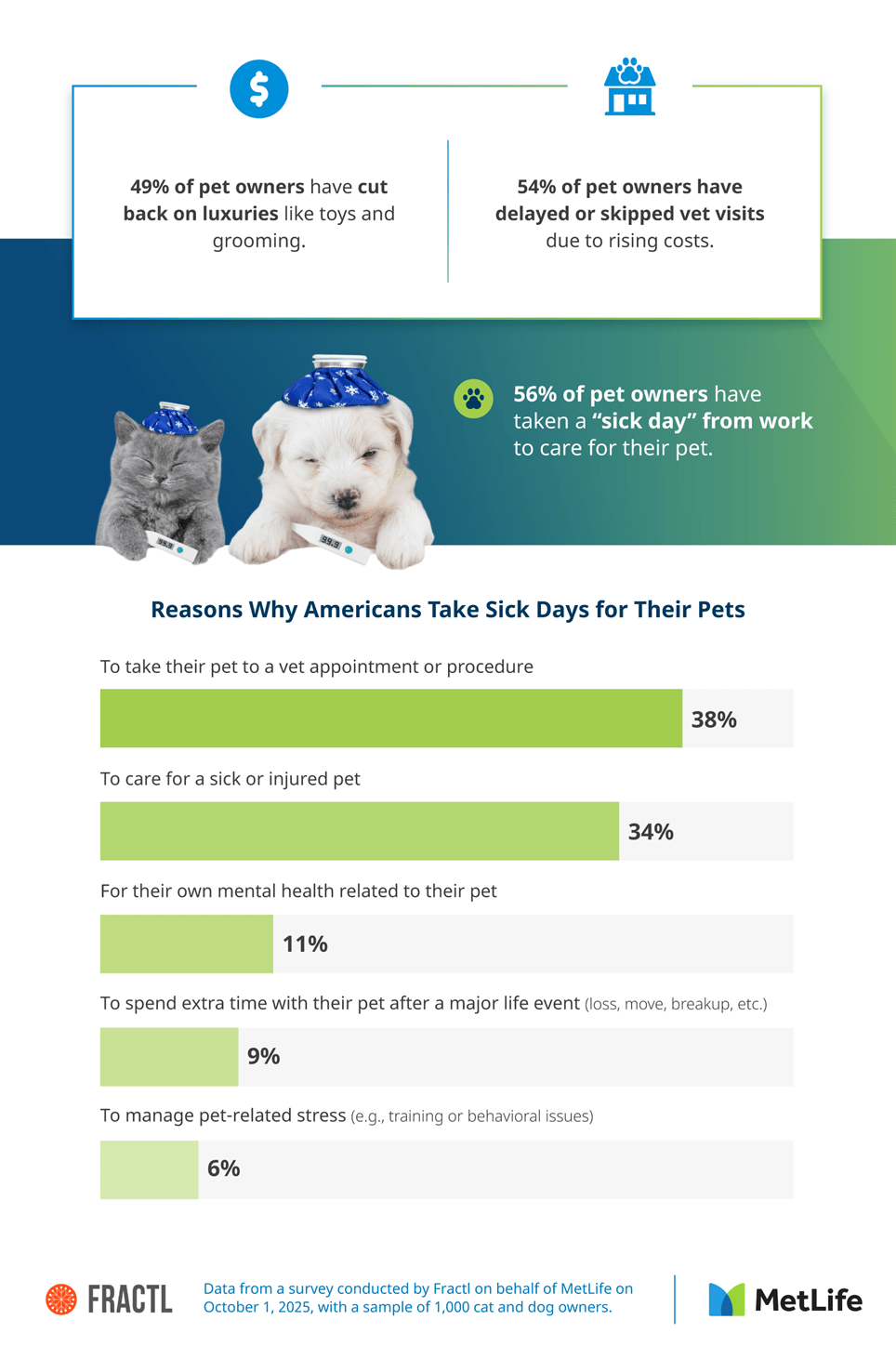
Rising prices have forced over half of pet owners (54%) to delay or skip veterinary appointments, and nearly as many (49%) have reported cutting back on pet luxuries, such as toys and grooming. Among those feeling the squeeze, younger generations are making the biggest cuts.
Due to increasing costs, 61% of Gen Z and 55% of millennial pet owners have delayed or skipped vet visits, compared to 50% of Gen X and 49% of baby boomers. Pet services spending has also been reduced by 54% of Gen Z, 51% of millennials, 47% of Gen X, and 36% of baby boomers.
When asked how long they could continue providing pet care if they lost their job, responses varied as follows:
Younger generations were vulnerable, with 15% of Gen Z and 13% of millennials saying they could afford pet care for less than a month.
However, financial pressure hasn't dampened emotional commitment. A majority (56%) have taken a sick day to care for a pet, and 38% did so specifically to attend a vet appointment or procedure. An additional 34% stayed home to care for a sick or injured pet.
Nearly 4 in 5 pet parents (78%) said they'd prioritize spending on their pets over personal luxuries like dining out or streaming subscriptions. In fact, 42% have already chosen cheaper food, travel, or health care for themselves to keep pet spending steady.
From remote work preferences to job changes, pets are playing a surprising role in career choices.
More than a quarter of pet owners (28%) have taken on a side hustle just to cover pet-related expenses. This trend spans all generations, with Gen Z leading the way at 31%, followed by millennials (29%), Gen X (26%), and baby boomers (21%).
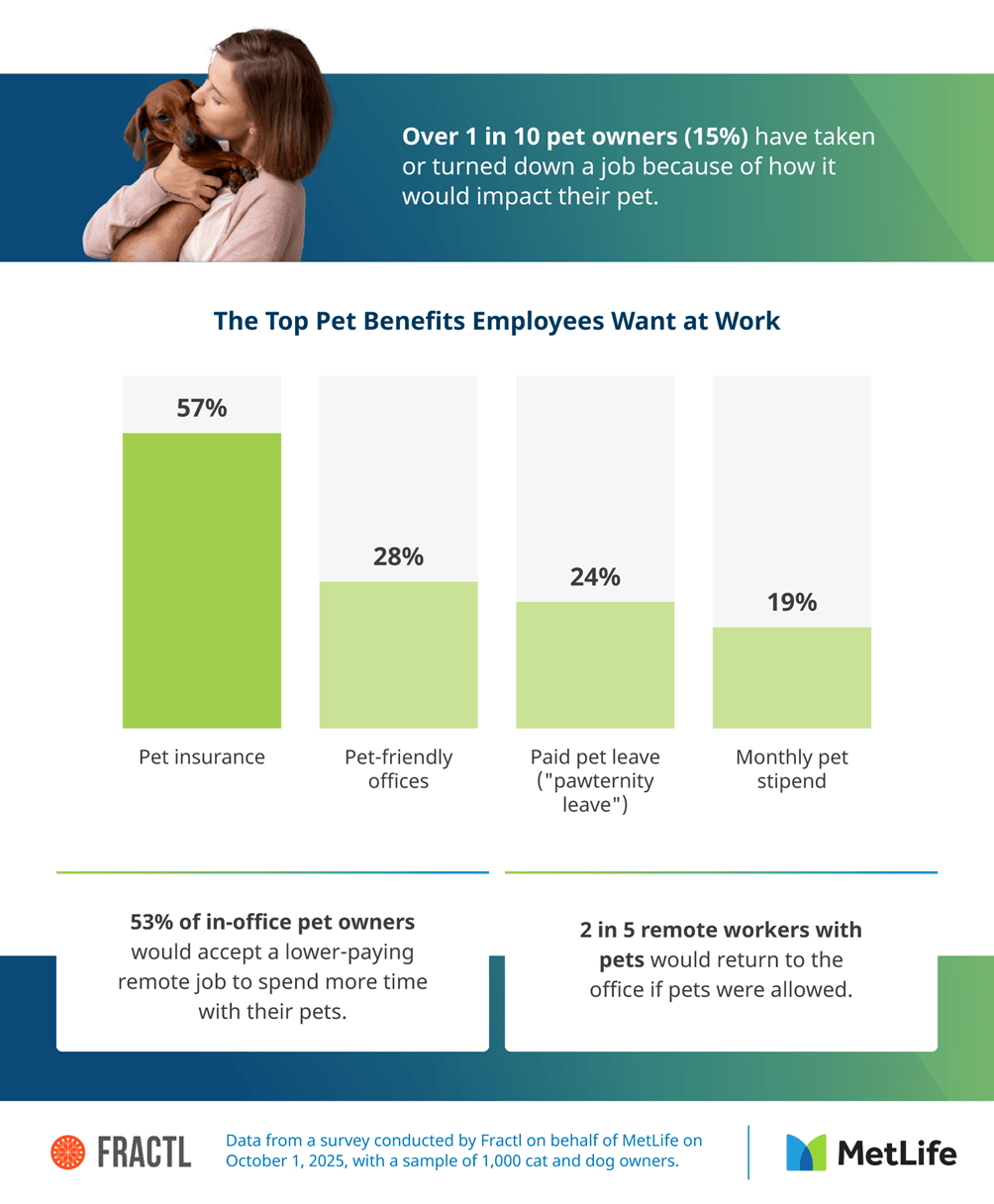
Pets are even influencing job offers: 15% have accepted or declined a position based on how it would impact their pet. This includes 16% of Gen Z and 14% of millennials.
Inflation continues to impact pet owners, with 36% of Gen Z, 33% of millennials, 30% of Gen X, and 26% of baby boomers reporting that it has made them less likely to purchase pet insurance. Still, many see the value, as 68% of Gen Z, 62% of millennials, 55% of Gen X, and 52% of baby boomers believed their employers should offer pet insurance as a workplace benefit.
Over half of pet owners (57%) wanted their employers to offer pet insurance as a benefit. Additionally, 53% of in-office pet owners would take a lower-paying remote job to spend more time at home with their pets. Roughly 2 in 5 remote workers with pets said they'd return to the office if they could bring their pets along, including 41% of Gen Z, 41% of Gen X, and 39% of millennials.
More than ever, pets are a source of comfort, motivation, and emotional grounding amid economic strain.
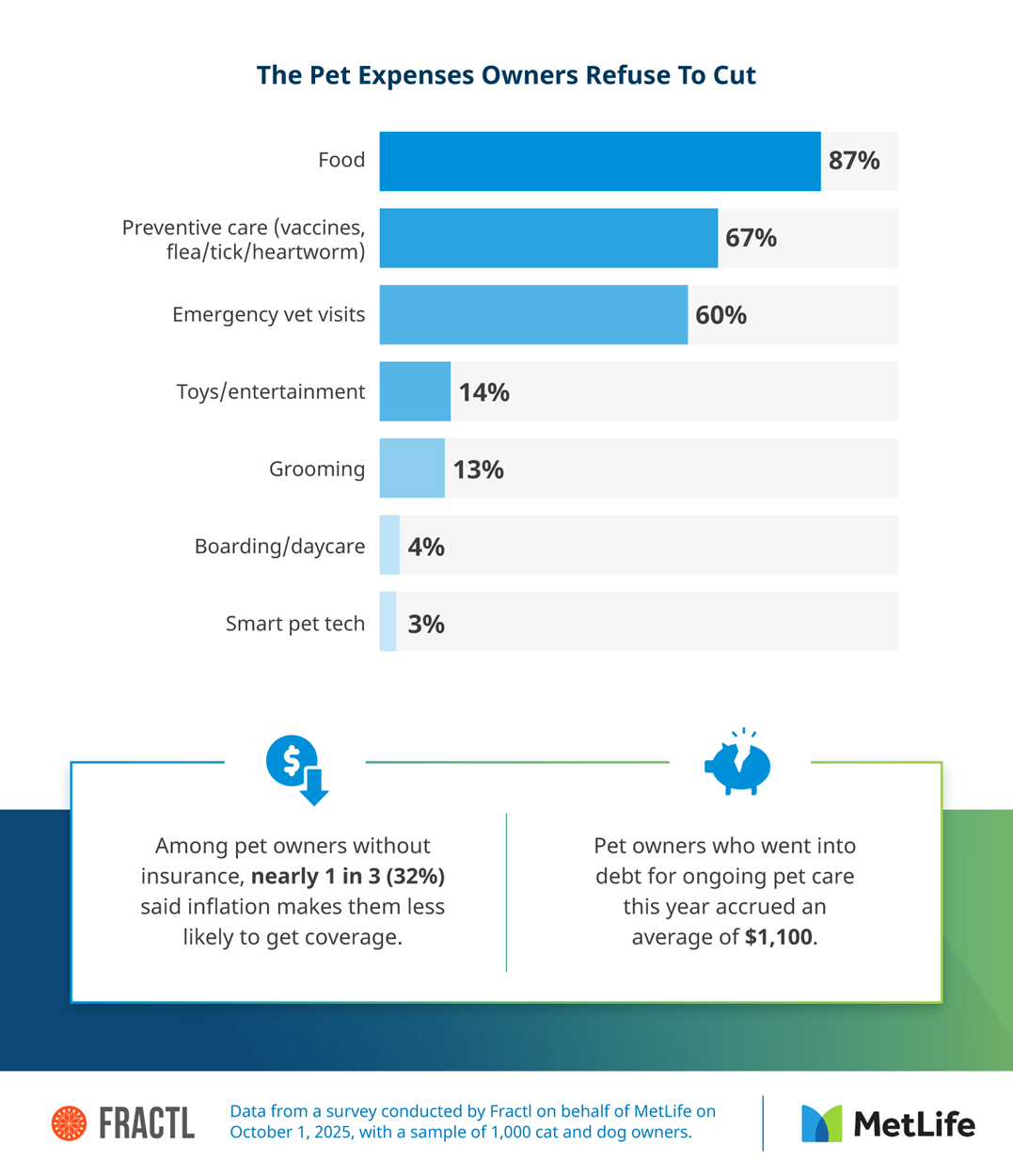
One in 10 pet owners had gone into debt in the past year due to ongoing pet care, racking up an average of $1,100. Gen Z reported the highest debt, averaging $1,200. For some, financial challenges may mean making difficult choices. Most owners (82%) said they would keep their pets no matter what, but 18% would consider rehoming them if they lost their job.
Despite financial pressures, many owners continue to invest in smart tech for their pets, including:
Many pet owners (71%) reported that their pets had provided emotional support during a career transition that negatively impacted their well-being. Nearly 2 in 5 described their pets as an emotional lifeline that kept them going. Another 30% said their pets helped them feel less isolated or lonely, while 12% said their pets motivated them to work harder.
Almost half (48%) were also willing to relocate to a less expensive area to afford better care or more space for their pet.
Today's pet owners are going the extra mile to care for their animals, even if it means cutting back in other areas or changing career paths. Despite financial pressure and uncertainty, pets continue to be a source of comfort and motivation. From everyday routines to long-term plans, they're helping people manage life's ups and downs with love and loyalty at the center.
This survey, conducted by Fractl on behalf of MetLife on October 1, 2025, examined 1,000 American pet owners to explore how economic uncertainty and career shifts are reshaping the way Americans budget for, prioritize, and emotionally rely on their pets in 2025.
The average age of respondents was 40; 58% were female, 40% were male, and 2% were nonbinary. Generationally, 7% were baby boomers, 30% were Gen X, 44% were millennials, and 19% were Gen Z.