When your pet starts acting differently, it can be hard to know what's going on. Is it stress, a health issue, or just a temporary change? Fractl surveyed 1,000 U.S. cat and dog owners on behalf of MetLife to learn how pet parents interpret signs of emotional distress and what they do next. Their responses show how common these concerns are and how online searches and AI tools are affecting the steps owners take to support their pets.
Key Takeaways
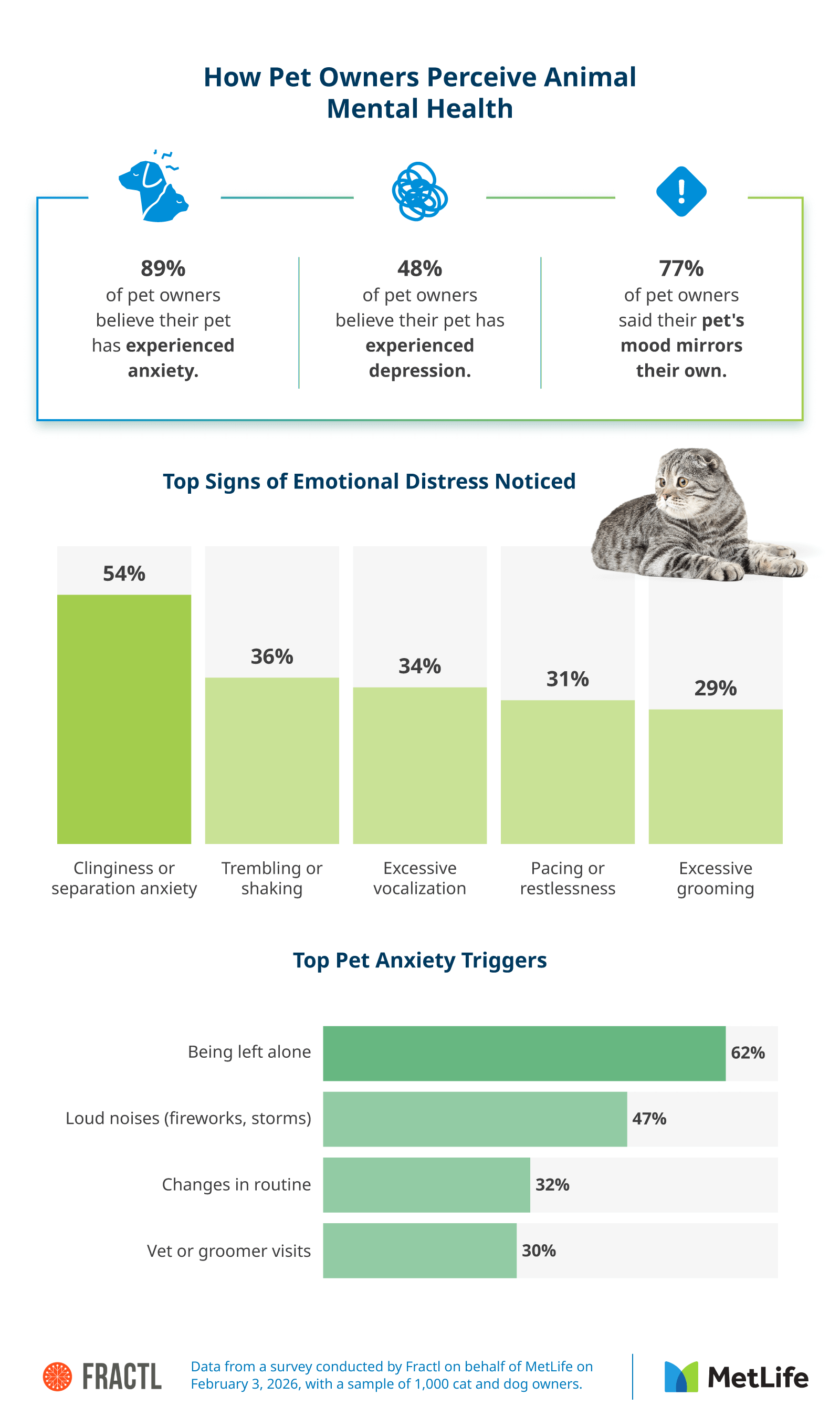
- 89% of pet owners believe their pet has experienced anxiety.
- Nearly half (48%) believe their pet has experienced depression or persistent sadness.
- More than 3 in 4 pet owners (77%) said their pet's mood mirrors their own stress or mental health.
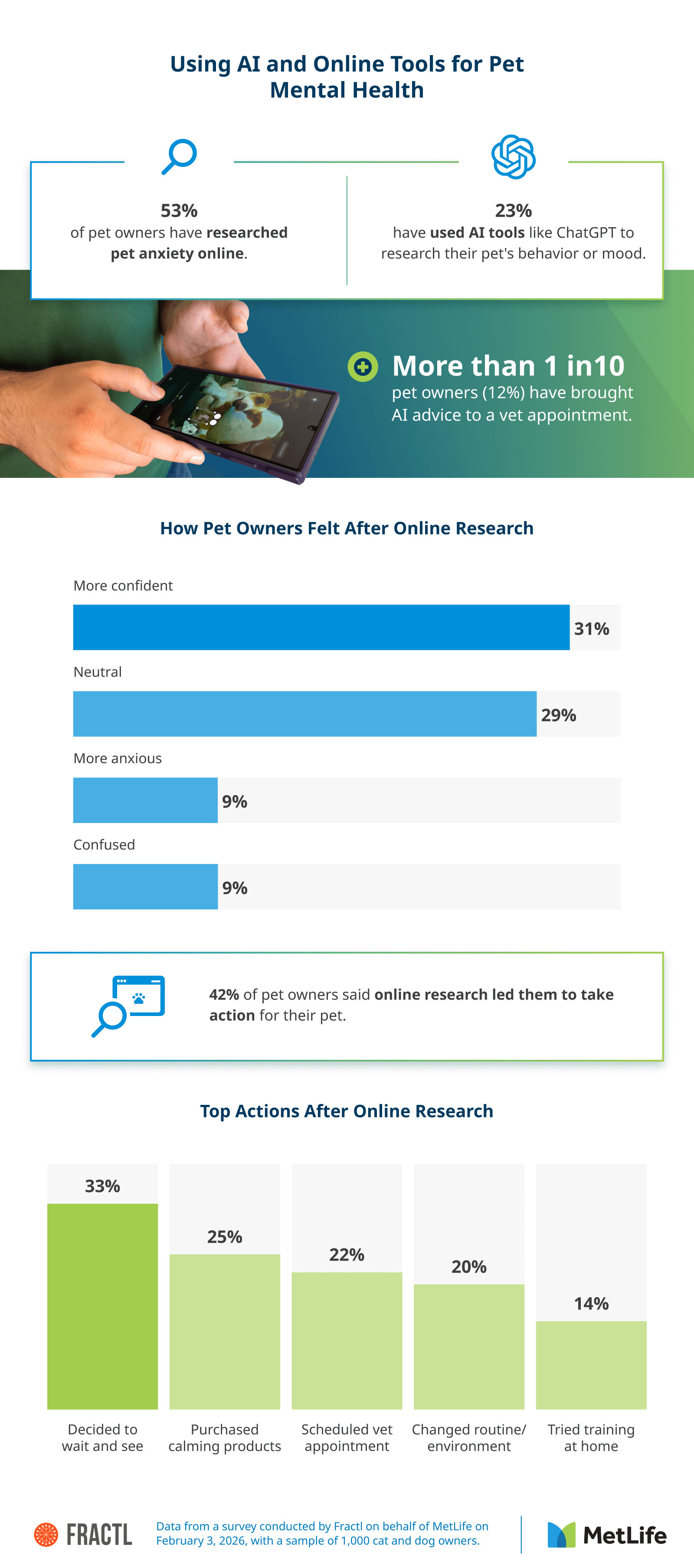
- Nearly 1 in 4 pet owners (23%) have used AI tools like ChatGPT to assess their pet's mental health.
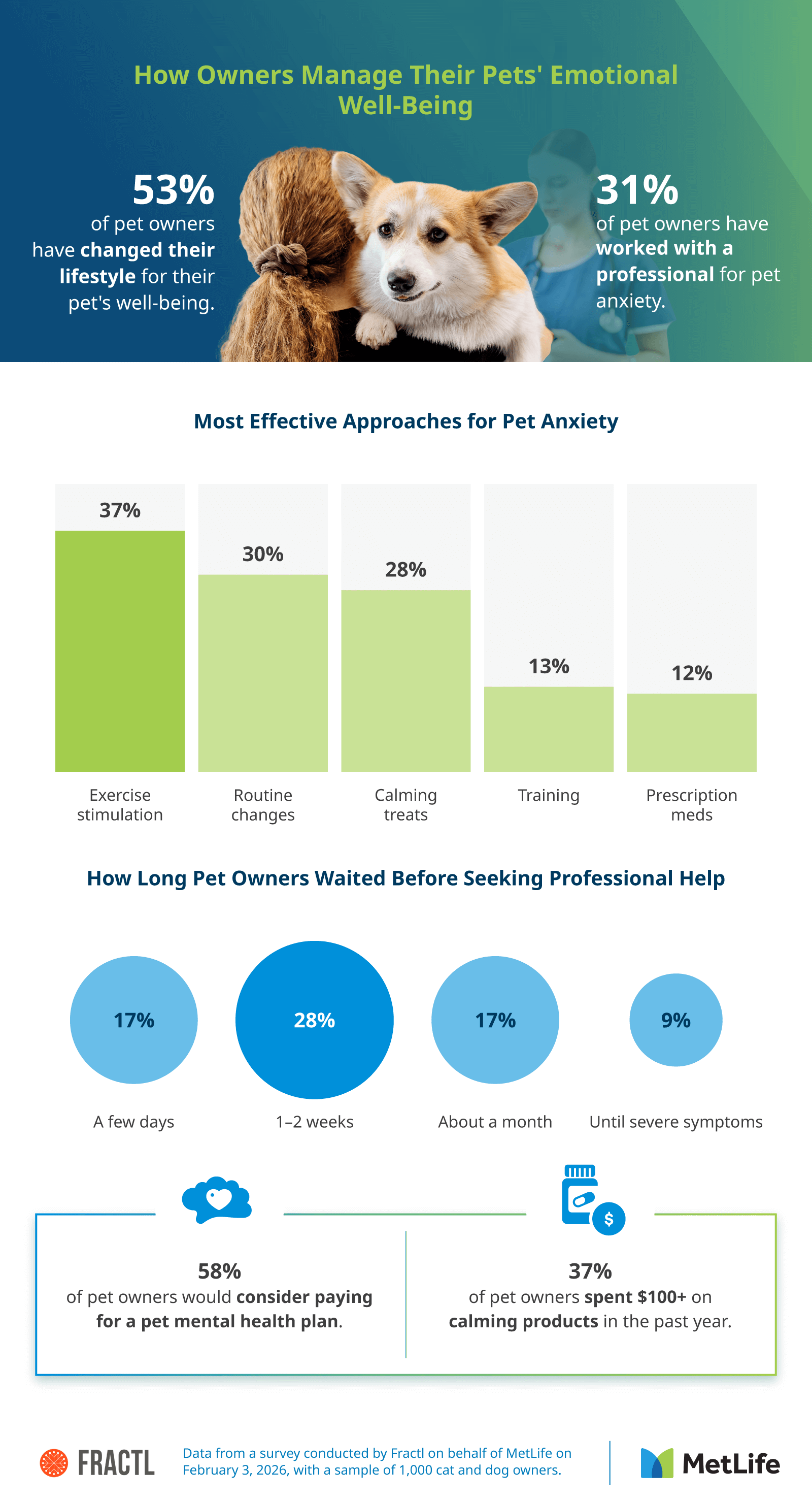
- Over half of pet owners (53%) have changed their own schedule or lifestyle because they were worried about their pet's emotional well-being.
Can You Read Your Pet's Feelings?
Changes in your pet's behavior can be concerning, especially when you're not sure what they mean. Pet owners shared the most common emotional stress cues they've noticed and their pets' biggest triggers.
Millennials (91%) were most likely to believe their pet had experienced anxiety, followed by baby boomers (89%), Gen X (88%), and Gen Z (85%). Gen X was the most likely to say their pet had felt depressed (51%), while baby boomers (38%) were the least likely.
Dog owners were slightly more likely than cat owners to believe their pet had experienced anxiety (90% vs. 87%) and depression (47% vs. 43%).
Top Dog Breeds That Owners Said Struggled Most With Anxiety
- Shih Tzu
- Australian Shepherd
- Labrador Retriever
- German Shepherd
- Golden Retriever
Top Dog Breeds That Owners Said Struggled Most With Depression
- Miniature Schnauzer
- Pomeranian
- Shih Tzu
- Boston Terrier
- German Shepherd
Only 1 in 5 pet owners (21%) felt very confident in telling the difference between emotional distress and physical illness in their pet. Gen Z also reported the highest confidence in reading their pet's emotions (24%), while baby boomers reported the lowest (17%).
More than a third of pet owners (35%) had mistaken an emotional issue for a physical one (or vice versa), showing how easy it can be for symptoms to blur together. Gen Z (46%) was most likely to say they had mistaken an emotional issue for a physical one, nearly double the rate of baby boomers (25%).
When Worry Meets the Algorithm
When uncertainty over symptoms hits, many pet parents start searching for answers. Online research and AI tools are now part of how owners decide whether to wait, make changes at home, or seek professional help.
Among owners who used AI tools, the top reasons were understanding a specific behavior (26%), deciding if they should see a vet (17%), and researching treatments (16%). After using online or AI research, 42% said it led them to take action for their pet.
Gen Z (63%) was more than twice as likely as baby boomers (29%) to use online searches for pet mental health. Gen Z also led AI tool usage (29%), while only 10% of baby boomers reported using AI for pet behavior questions.
Cat owners (50%) and dog owners (49%) were similarly likely to use online searches for pet mental health, while dog owners were slightly more likely than cat owners to have used AI tools (23% vs. 20%). These patterns suggest that "looking it up" was a common first step, especially for younger pet parents, and that it sometimes helped them move from worry to action.
How Owners Adapt to Pets' Emotional Needs
For many owners, helping a pet feel better means adjusting routines and experimenting with what makes daily life smoother.
Nearly 3 in 5 Gen Z pet parents (59%) said they had changed their lifestyle for their pet's well-being, compared with 39% of baby boomers.1 Gen Z (34%) and millennials (33%) were also about twice as likely as baby boomers (17%) to have worked with a professional for pet anxiety. Half of Gen Z said they would consider paying for a pet mental health plan, compared with 39% of baby boomers.
More than half of dog owners (54%) and 48% of cat owners had changed their lifestyle for their pet’s emotional well-being. Dog owners were also more likely to seek professional help (34% vs. 24%) and somewhat more open to paying for a mental health plan (46% vs. 43%).
Across the board, pet owners reported spending a median of $50 on calming products or services in the past year, with more than a third (37%) spending $100 or more on calming products alone.2
When You're Not Sure What Your Pet Needs, Start Small
If your pet's behavior feels off, you're not alone in wondering what to do next. Many pet parents notice changes and try to sort through whether it's stress, a health issue, or something temporary. Start with small steps: track changes in behavior, look for patterns, and talk to your vet if something doesn't feel right.
Online tools can be helpful for gathering ideas, but they're not a replacement for professional guidance. Paying attention early and asking questions can help you feel more confident, and help your pet feel more supported.