New Cat Owner Guide

Four Minutes

Being prepared for the arrival and care of your new kitty can help you bring them home with confidence. Take some of the pressure off by knowing what to plan for, so you can focus on building a meaningful relationship.

We’ve put together a guide to help set you both up for success — from tips for new cat owners to considerations for various situations. You’ll also get a glimpse at some of the costs of cat ownership you can expect as well as how cat insurance can help you manage them.

MetLife Pet can help you cover cat injury & illness costs

Preparing for Your Pet

Whether you’ve had cats before or you’re a first-time cat owner, there are a handful of things you can do to help their transition go smoothly.

Get the essentials

Purchasing items you need to take care of your new cat is a great start. These essential supplies can include:

  • Collar with an ID tag
  • Litter box, litter, and scoop
  • Beds
  • Toys and scratching posts or pads
  • Dental products
  • Food and treats, along with food and water bowls
  • Grooming tools (including a nail trimmer and brushes)
  • Cat carrier
  • Pet cleaning supplies (because messes happen!)

If your budget allows, you might also be interested in buying things like a pet camera, cat tree, pet wipes, or pheromone diffuser.

Setting your cat up with a veterinarian is another essential. If you don’t already have one, look at online reviews, ask other local pet owners, or call different offices and ask for an overview of their practice. It’s important to find a licensed vet, and if they’re not a 24/7 clinic, find an emergency vet office, too.

Cat-proof your home

Pet-proofing your home can help keep your new cat safe. Kittens and older cats alike get curious, and both may find home decor items, window sills, counter tops, and bookshelves intriguing to explore. You may want to:

  • Remove breakable items from countertops or keep them away from edges
  • Put stoppers on cabinet doors
  • Provide a spot for your cat to sit comfortably on shelves or window sills
  • Keep cleaning products, medications, toxic plants, and other potential poisons away or out of reach
  • Hide electrical cords and cables
  • Keep personal items you don’t want broken or scratched out of reach

If there are other people in your home, this can also be a good time to talk about house rules for your new cat. Take time to decide who’s responsible for such tasks as their caretaking, litterbox maintenance, and where your kitty is allowed to go.

Set up a space for your new cat

When you first bring them home, it’s generally a good idea to let your cat spend a fair amount of time by themselves. Give them a space that’s all their own to help your kitty feel safe and build confidence while adjusting to their new environment. Try putting a bed or cat tree in the corner of a quiet room and then observe where your cat seems to spend the most time.1

As your cat gets more comfortable, they start exploring more. This is a sign you can transition their litterbox, bowls, beds, and anything else to their permanent locations. Place their food and water bowls away from their litterbox, and place their litterbox in a low-traffic area of your home.1

Nutrition and Care

No two cats are the same. Even if you’re not a first-time cat owner, how you’ve cared for another cat may not work for your new feline friend.

Cat food and treats

Proper cat nutrition can take time and adjustments to make sure you have the right food and feeding schedule for your specific pet. You’ll need to have a bit of food on hand for when you bring your cat home, but their first vet visit is a great time to ask your vet for their recommendations. Constant access to fresh, clean drinking water is also necessary.

Treats and pheromones can be helpful for training and anxiety reduction.1 Look for safe, high-quality products, and be mindful of any reactions to diet your cat might have.

Toxic human foods to avoid

Cats aren’t as likely to beg for food as dogs, but they’re curious — if something smells good, they might want to try it. Keep an eye on your cat because certain human foods can be toxic to them. Some to avoid giving your cat include:2

  • Avocados
  • Caffeine, chocolate, and coffee
  • Candy and anything with xylitol
  • Dairy
  • Excessive salt
  • Grapes and raisins
  • Onions and garlic
  • Raw/undercooked eggs or meat

If your cat starts behaving oddly, and you think they either ate something bad or may have a food allergy, take them to your vet for an exam.

Did Your Cat Eat Something They Shouldn’t Have?

Pet Insurance Can Help

Exercise and stimulation

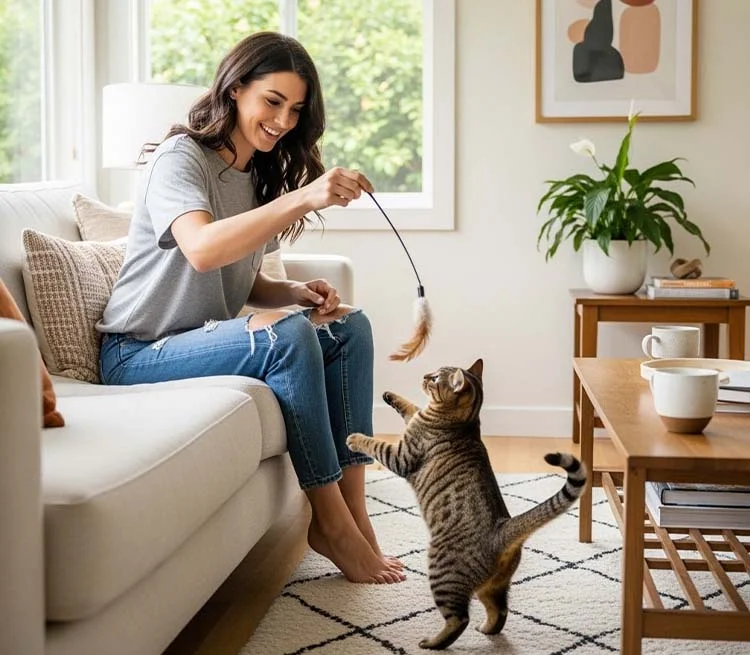
Cats require playtime and physical exercise  to help keep them healthy and happy. By providing daily mental and physical stimulation, you’re giving your cat a chance to release energy, reduce boredom and anxiety, maintain a healthy weight, and help keep unwanted behaviors at bay. A cat’s breed, age, and personality can all influence how much exercise and playtime is needed.3 Ask your vet for recommendations.

Cats can become uninterested in playtime if it’s too long. Figure out what kind of exercise or toys your cat likes, and aim for a few short sessions each day.3 You might even want to try supervised, leashed outdoor time for additional mental stimulation.1

Grooming

Cats may not need professional grooming, but at-home baths can be a challenge. The good news is cats are good self-groomers and may only need a bath if they get dirty or are unable to clean themselves. Keep their nails trimmed, and regularly brush your cat to help prevent mats and fleas. Helping cats keep their teeth clean is a health benefit, so consider a dental hygiene regime.

Brushing and petting can be a great opportunity to bond with your cat. To make a grooming session an enjoyable and engaging experience for your feline, keep them as short as you can.1

Training and Behavior

Training your cat offers physical and mental stimulation along with the chance to bond and reduce undesirable behaviors. For best results, use positive reinforcement, quick sessions with quick rewards, and repetition.4

Cats are initially more motivated by food than vocal praise, so high-quality treats are crucial. The goal is to get your cat to do what you desire — stay, get in their carrier, scratch the post, etc. Start by quickly rewarding them with treats and praise. Then transition to mostly emotional rewards and praise, such as petting their favorite spot, so eventually they won’t need a treat to complete the task.4

While your cat typically doesn’t need play dates or walks in the park like most dogs do, socializing with your cat can help them feel comfortable in their new home and can lead to positive behaviors. Playtime is a great way to encourage friendliness and invite social interactions. But cats also enjoy being independent, forcing them to interact with you could lead to a break in trust or undesirable behavior.1

Bonding and Responsible Ownership

Having a loving relationship with your cat might be one of the best feelings as a cat parent. Let’s look at some ways you can practice responsible pet ownership — from learning what kind of affection your kitty likes to the vet care that keeps them healthy.

Give affection and attention

Cats can be hard to read — sometimes they want to play or curl up in your lap, other times it seems they only want to be alone. Try displaying different types of affection to see which ones your cat responds well to. Watch their body language for clues about how they’re feeling.5

To create a strong bond, prioritize building trust through routines and supporting their independence — especially for cats who might have had a hard past.1 Quality time should be something your cat can depend on. Spend intentional time with them daily in short spurts. Caring for your pet is more than just vet care, diet, and exercise — it’s a chance to experience the joy and love that comes from this special relationship.

Set them up for success

When it comes to keeping your new cat healthy and happy, consider the following:

  • Getting them microchipped could make it easier to be reunited if they get lost.
  • Spaying or neutering can be beneficial. If you’re unsure, ask your vet about the pros and cons.
  • Stay on top of your cat’s routine care, like regular vet visits, vaccines, as well as flea, tick, and heartworm prevention.
  • Abide by the animal laws or regulations where you live, like licensing or vaccination requirements.
  • Establish a relationship with a trustworthy sitter or cat boarding facility for when you’re away.

As your cat’s guardian, it’s your responsibility to advocate and provide for them. Understanding their needs and behaviors can help ensure your feline is feeling comfortable and safe.

An Optional Preventive Care Add-On Can Help You Cover Routine Care Costs

Enroll Your Cat Today

Look out for health issues

Cats can develop diseases and get injured for various reasons, including their breed, age, and lifestyle. Your cat’s behavior can give you clues they might be in pain — look for signs that say, “this isn’t normally how I act.” If you notice any, a trip to your vet for a diagnosis and treatment is a good idea.

Some common health issues that could require medical attention include:6,7

  • Infections or inflammation (like ear, eye, respiratory, urinary, or gastrointestinal)
  • Broken nails or bones
  • Worms and fleas
  •  Dental issues
  • Hairballs
  • Feline immunodeficiency virus (FIV)
  • Feline leukemia virus (FeLV)
  • Diabetes
  • Cancer

Some of these health issues might be easier to manage financially, while others can mean high vet bills and ongoing medical care.

Costs

Responsible pet ownership also means doing some financial planning when it comes to the costs you might pay for your new companion. The costs of cat ownership include many different expenses, and could look something like:8

  • Up-front costs: Up to $2,700 or more
  • Yearly: Up to $3,500 or more
  • Lifetime: Up to $61,500 or more

Adoption costs alone could range from $30 to nearly $1,000 or more, depending on where you adopt your cat from (e.g., a rescue, shelter, or breeder). The costs for bringing home your cat, plus their ongoing care, can vary based on their breed, age, size, health condition, necessary medical care, and where you live.8

In addition to planning for regular care costs (like food, litter, or new scratching posts), it’s a good idea to figure out how you plan to pay for vet bills . You might decide to budget for them, set money aside in a savings account for pet emergencies, or even purchase a pet insurance policy to share the cost of unexpected — and sometimes routine — vet bills.

Pet Insurance Can Help You Protect Your Cat and Save on Vet Bills

Between unexpected vet bills, preventative measures, or prescription food for cats that need a special diet, managing all of their health care could be overwhelming.

Pet insurance can be a great way to help you manage these types of pet health costs. MetLife Pet offers customizable plans with reimbursements up to 90% on covered expenses.9 We also offer an optional Preventive Care plan you can add to your policy to help you cover certain routine and wellness expenses up to your selected benefit limit.

The cost of care shouldn’t be the deciding factor in helping your cat get well or stay well. Cat insurance from MetLife Pet can help you. Enroll your kitty today and start using your benefits virtually the same day with our 0-day waiting period on accidents and Preventive Care coverage.10 Start with a free quote.

Your cat deserves great care. Get it with the help of MetLife Pet