FLUTD doesn’t describe a single condition but rather multiple conditions that cause issues in a cat’s urinary tract. These conditions, or causes, include feline idiopathic cystitis, urinary stones, urinary infection, and urethral obstruction.1
Symptoms of FLUTD include the following:1,2
- Straining and/or crying while urinating
- Frequent and/or prolonged urination
- Excessive licking of genital area
- Blood in the urine
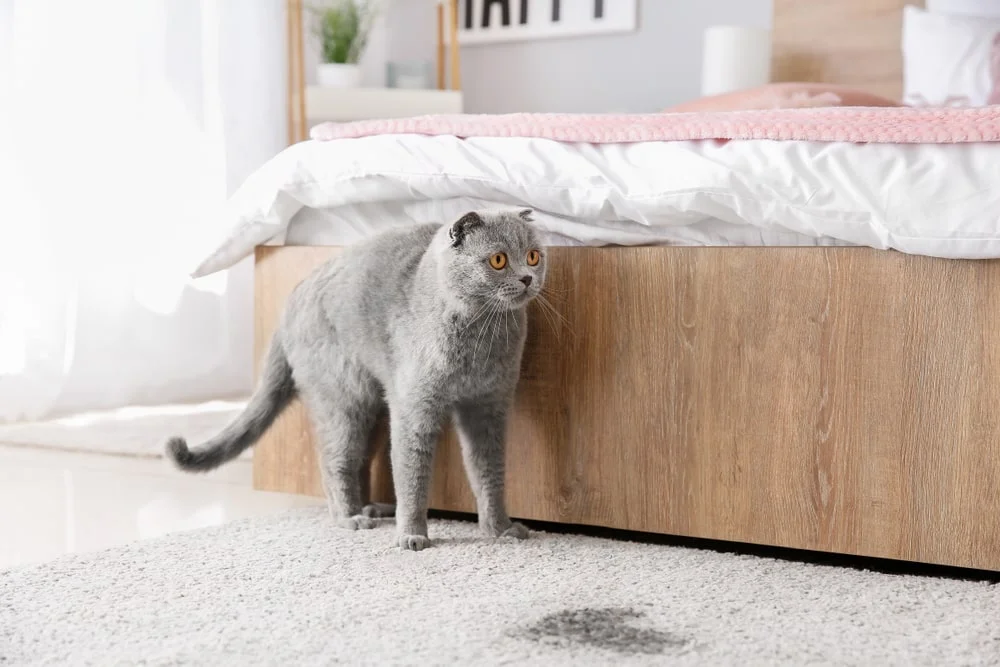
- Periuria (urinating outside of the litter box)
Cats with a urethral obstruction can exhibit many of these signs, and they won’t be able to pass much, if any, urine.1
As mentioned, there are multiple potential causes of FLUTD, including:1,2
- Feline idiopathic cystitis (FIC): Also known as interstitial cystitis, this is the most common cause of FLUTD but isn’t well understood. Some cats will have a single episode of FIC, while the condition is chronic in others. Dietary changes and stress can increase the risk of a cat developing FIC.
- Urolithiasis: This condition is the development of urinary stones — rock-like formations made up of minerals — within a cat’s urinary tract.
- Urinary infection: Different types of infections of a cat’s urinary tract can cause FLUTD. Bacterial infections are the most common type, but fungi, parasites, and viruses can also cause FLUTD. Urinary infections, also called urinary tract infections or UTIs, are uncommon in young cats but more prevalent in older ones.
- Urethral obstruction: This is the most serious cause of FLUTD. If your cat has a urethral obstruction, it means the urethra is partially or completely blocked by urinary stones or urinary plugs, which may be life-threatening if not treated immediately. Male cats are at greater risk of developing a urethral obstruction due to their longer, narrower urethras.
Though rare, a cat’s FLUTD could stem from other causes, such as a tumor in the urinary tract, diabetes, congenital abnormalities, hyperthyroidism, or an injury to the urinary tract.1 If you suspect that your feline friend is suffering from FLUTD, take them to the vet for diagnosis and treatment.
FLUTD can be difficult to diagnose due to the variety of possible causes. Your veterinarian will likely do a physical examination of your cat and then proceed with diagnostic testing.1 These tests could include a urinalysis, urine culture, blood work, X-rays, and ultrasounds.1,2
FIC can’t be diagnosed with testing. Instead, a vet will rule out all other causes of FLUTD first to determine this particular cause.1
After your vet identifies the specific cause of your cat’s FLUTD, they will recommend a treatment plan specific to the cause.
The goal of FIC treatment is to reduce the severity and frequency of episodes. To do so, your veterinarian may recommend dietary adjustments and stress management. Your vet is likely to prescribe painkillers to ease your cat’s symptoms when in an episode.2
The treatment of urinary stones depends on the type of stone. Some types can be dissolved with a special diet or flushed out with a solution, but surgical removal is required for others. After removal, your vet may recommend dietary changes or medication to prevent stones from forming again.1
Treatment for a urinary infection also relates to the severity and cause of the infection.1 Your vet is likely to prescribe antibiotics and pain medication. They may also recommend a diet of wet food to help your cat’s urine be less concentrated.3
If you have a male cat showing signs of a urinary infection, treat it as an emergency. This is because such infections can be fatal in males.3
A urethral obstruction can be life-threatening, so it must be considered an emergency. This is because if the urethra becomes fully blocked, the kidneys are no longer able to function. Death may occur within 24-48 hours, so the need for immediate treatment is critical.1
When treating a urethral obstruction, dislodging the stone or plug is the first step. Your vet will do this by flushing out the obstruction with a sterile solution. From there, treatment may involve the administration of IV fluids to help with dehydration and electrolyte imbalance.1
Some cats experience chronic urethral obstructions. In such cases, a vet may recommend a perineal urethrostomy, which is a surgery that removes part of a cat’s urethra.1
Seeing your cat in distress and pain can be upsetting, and thinking about a big vet bill in your near future can feel even worse. With a MetLife Pet Insurance policy, you could be reimbursed for up to 90% of covered costs related to FLUTD.4
Consider Jasper, a Russian Blue cat from California. Jasper’s parents noticed that their five-year-old kitty was urinating more frequently than usual and straining while doing so. They took him to the vet, where he was diagnosed with FLUTD. He was then hospitalized and treated before returning home. The total bill for the exam and hospitalization was around $2,550, and MetLife Pet covered over $2,300.5
Discover if a cat insurance policy with MetLife Pet Insurance is right for you. Get your free quote today.